China’s economy grew faster than expected in the first quarter of 2026, and nobody in Beijing is celebrating.
The headline number is strong. The conditions that produced it are already eroding. And the risks gathering around the world’s second-largest economy right now are some of the most concentrated it has faced in years.
China’s National Bureau of Statistics confirmed this week that GDP grew 5.0% year-on-year in the January to March period, reaching 33.4 trillion yuan.
That is up from 4.5% in the final quarter of 2025 and comfortably above analyst forecasts of 4.8%. It is also the fastest annual pace in three quarters. On paper, a clean beat. In practice, a number that requires considerable context to understand.
What Drove the Number
The growth was not broad-based. It was front-loaded. Total imports and exports grew 15% in the quarter, with industrial enterprises above designated size posting value-added growth of 6.1%.
High-tech manufacturing was particularly strong, with integrated circuit manufacturing up 49.4% and electronics materials up 32.5%. These are genuinely impressive figures and reflect real industrial capacity that China has been building for years.
But a significant portion of the export surge was not organic demand. It was front-running. Businesses across Asia and the US were accelerating purchases of Chinese goods ahead of anticipated tariff escalation, stockpiling inventory before new trade barriers made it more expensive.
That kind of demand pull-forward inflates a single quarter’s numbers while borrowing from future ones. The March export data, which showed a sharp slowdown relative to January and February, suggests the rush was already fading by the end of the period.
Consumer spending, the most durable foundation of modern growth, remains soft. Retail sales rose just 2.4%, missing estimates and continuing a pattern of weak domestic demand that has persisted since the post-pandemic recovery lost momentum.
Fixed-asset investment rose only 1.7%. The property sector, which spent years as the engine of Chinese growth, remains a structural drag.
The Tariff Wall Ahead
The more pressing concern for China’s economy is what comes after Q1. The Trump administration has imposed sweeping tariffs on Chinese goods, and the window during which Chinese exporters could ship ahead of those measures has now largely closed.
Analysts have warned that export volumes could compress sharply in Q2 and Q3 as the tariff burden makes Chinese goods materially more expensive in the US market and forces supply chain adjustments that take quarters to resolve.
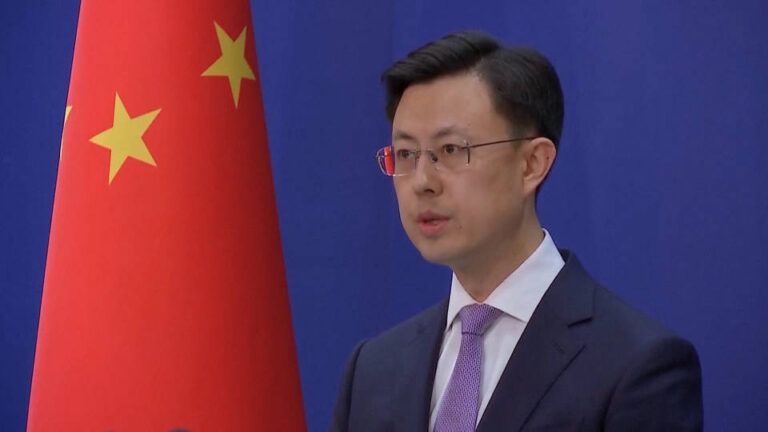
Beijing has retaliated with its own countermeasures, and both sides are heading into a mid-May summit between Xi Jinping and Trump with significant economic grievances already baked in.
A trade arrangement is possible, and markets are pricing in some probability of de-escalation. But the structural decoupling between the US and Chinese technology and defence supply chains is proceeding regardless of whatever is agreed at the summit table. That is a long-term drag that quarterly GDP figures do not capture.
The Iran War’s Spillover
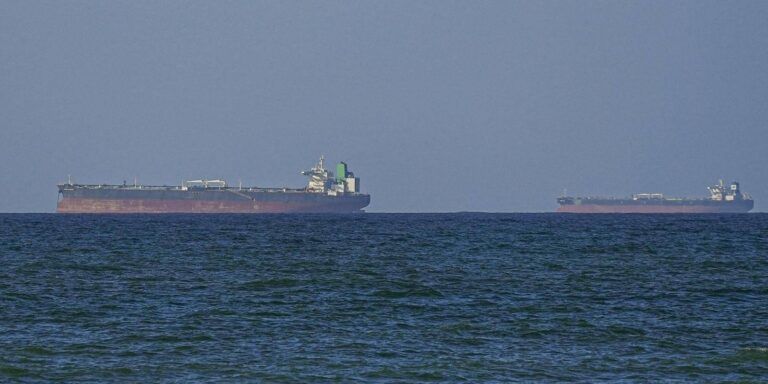
The Middle East conflict adds another layer of exposure that China cannot fully control. Beijing imports a substantial share of its oil from Iran and the Gulf states whose shipping routes run through the Strait of Hormuz.
Despite the conflict, China has so far managed the energy shock through ample strategic reserves, a diversified energy mix, and state price controls that contain domestic inflation. The CPI rose just 0.9% in Q1, and the producer price index actually fell 0.6%, suggesting energy cost pressures have not yet filtered into the broader economy.
That buffer will not last indefinitely. If the Strait of Hormuz remains restricted or contested into the second half of the year, energy import costs will rise materially.
China is also navigating the political exposure created by US intelligence reports that it is preparing to ship weapons to Iran during the ceasefire, which directly threatens the trade talks it needs to manage tariff pressure from Washington.
A Strong Number in a Dangerous Environment
The Q1 figure gives Beijing a degree of credibility heading into a difficult period. China set its 2026 growth target at 4.5% to 5%, and the first-quarter print lands squarely at the top of that range.
That matters for domestic confidence, for investor positioning, and for the government’s political narrative around economic management.
But the IMF, which this week cut its global growth forecast to 3.1% with the Middle East war as the primary new downside risk, was clear that emerging market economies face the sharpest exposure to a prolonged conflict.
China, for all its size and state capacity, is not insulated from that risk. The front-loaded exports are done. The tariff headwinds are coming. And the geopolitical environment in which Beijing is operating is more complex than at any point in the recent past.
Five percent growth in Q1 is a reasonable result. Whether it represents the high point of the year is the question that matters more.
About the Author