For years, Iran’s foreign minister maintained a specific, reassuring line: Iranian ballistic missiles had been deliberately limited to a range of 2,000 kilometers. Europe was safe. The United States was safe. Tehran had drawn a line and it stayed behind it.
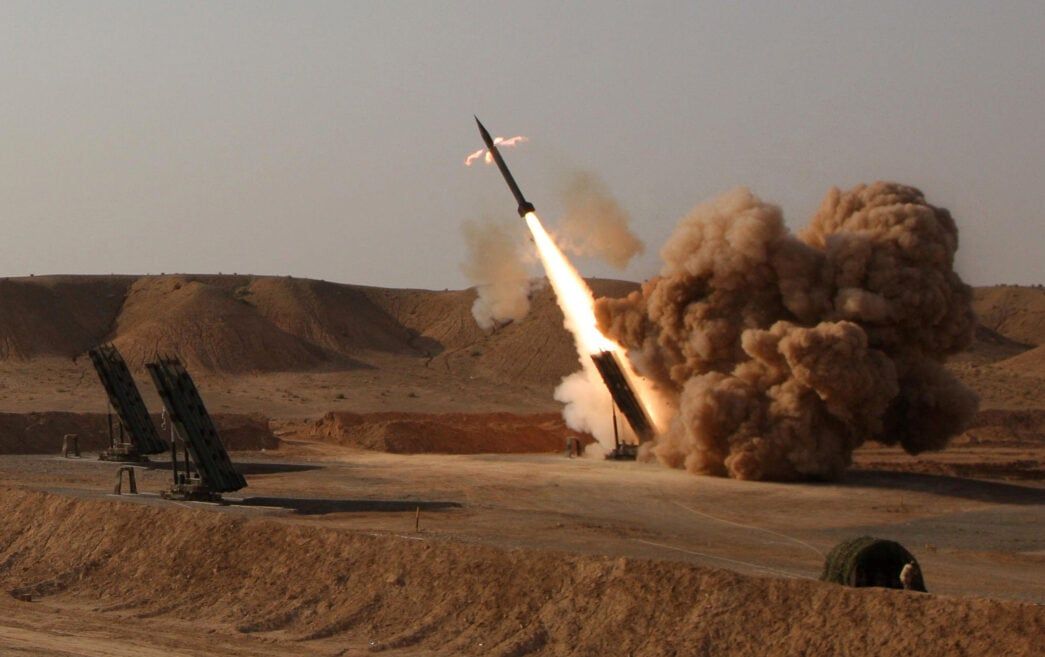
On Friday, Iran fired two ballistic missiles at Diego Garcia.
Diego Garcia is 4,000 kilometers from Iran.
Double the stated limit. In a single launch. Aimed at a base housing B-52 bombers, nuclear-capable submarines, and roughly 2,500 American and British military personnel in the middle of the Indian Ocean.
Neither missile hit the base. One failed in flight. A US destroyer intercepted the other with an SM-3 missile, though officials said it was unclear whether the interception was fully successful.
But the attack didn’t need to succeed to matter. Iran just showed the world what its missiles can actually do. And what they can do is reach Berlin. Paris. Rome.
What Iran Said Before, and What It Just Did
The 2,000-kilometer limit wasn’t informal. It was policy, stated publicly and repeatedly by senior Iranian officials.
In February, just weeks before Operation Epic Fury began, Foreign Minister Abbas Araghchi said on record: “We intentionally kept the range of our missiles below 2,000 km so we don’t have that capability. And we don’t want to do that because we do not have hostility against the United States people and all Europeans.”
That statement was designed to draw a line. To reassure Europe that it had nothing to fear. To push back against US claims that Iran’s space program was a cover for ICBM development.
On Friday morning, Tehran crossed that line by 2,000 kilometers.
Iran’s state media boasted that its missile range “is beyond what the enemy previously imagined.”
That is not the statement of a country that accidentally revealed a capability it was hiding. That is a deliberate demonstration.
What Diego Garcia Actually Is
Diego Garcia is one of the most strategically important military installations on earth, by design placed so far from any adversary that it was assumed to be untouchable.
It sits in the Chagos Archipelago in the middle of the Indian Ocean. The base has supported US operations from Vietnam through Iraq and Afghanistan. It permanently stations B-52 and B-1 strategic bombers. It has a deep natural harbour suitable for nuclear submarines. It houses the 15th Space Surveillance Squadron for satellite monitoring. It is a critical logistics hub, with ships pre-loaded with equipment to support an entire Marine brigade at short notice.
The US has described it as “an all but indispensable platform” for security operations across the Middle East, South Asia, and East Africa. B-2 Spirit stealth bombers have been flying operations against Iran from Diego Garcia since Operation Epic Fury began.
Iran tried to hit all of that with missiles it publicly claimed it didn’t have.
The Missile That Shouldn’t Exist
Defense analysts spent Friday trying to figure out exactly what Iran fired.
Justin Bronk of the Royal United Services Institute said the attack may have involved Iran’s Simorgh space launch rocket, adapted for use as a ballistic missile. That adaptation would explain the extended range while also explaining reduced accuracy, the missiles didn’t hit Diego Garcia and the targeting appears to have been imprecise.
Israel’s IDF Chief of Staff Eyal Zamir was more specific. He said Iran fired “a two-stage intercontinental ballistic missile with a range of 4,000 kilometers.”
Then he said something that will be quoted in European defense ministry briefings for weeks: “These missiles were not intended to hit Israel. Their range reaches the capitals of Europe. Berlin, Paris, and Rome are all within direct threat range.”
A senior US defense official who spoke anonymously said there had been speculation before that Iran might have missiles beyond its stated range. Diego Garcia “would seem to be” the moment they showed their cards.
Britain’s Uncomfortable Position
The timing of the Diego Garcia strike made Britain’s situation particularly awkward.
For three weeks, the UK had refused to allow the US to use British bases for offensive operations against Iran. Prime Minister Keir Starmer held that line even as Trump called NATO allies cowards and demanded help in the Strait of Hormuz.
On Friday, Britain reversed course. Starmer’s office announced that the UK would allow US forces to use RAF Fairford in England and Diego Garcia for “specific and limited defensive operations,” specifically to target Iranian missile sites being used to attack shipping in the Strait of Hormuz.
Iran fired at Diego Garcia before that announcement was made public. “Iran’s unsuccessful targeting of Diego Garcia was before yesterday’s update on the use of UK bases by the US,” the Ministry of Defence confirmed, which means Iran struck the base it didn’t yet know was being officially opened to US operations.
Iranian Foreign Minister Araghchi responded to the UK announcement immediately: Keir Starmer “is putting British lives in danger by allowing UK bases to be used for aggression against Iran.”
That is a threat. A specific one. From a country that just demonstrated its missiles can reach British territory.
Dimona, Arad, and a Daycare
The Diego Garcia launch was not the only significant strike on Saturday. Iran also hit Israel.
Ballistic missiles penetrated Israeli air defenses and struck the towns of Arad and Dimona in southern Israel. Dimona sits 13 kilometers from Israel’s secretive nuclear research facility. It was the first time in the war that area had been directly targeted.
Israeli emergency services treated at least 64 injured in Arad alone. Seven people were seriously hurt, including a four-year-old girl. In Rishon Lezion, cluster munitions from an Iranian missile hit a daycare. Emergency crews searched rubble for survivors. Buildings were photographed with floors collapsed and windows blown entirely out.
Trump’s 48-Hour Ultimatum
Trump responded to Saturday’s developments with a post on Truth Social issuing Iran a 48-hour ultimatum to open the Strait of Hormuz. He said he was considering striking Iran’s power plants if the Strait remained closed.
That threat is not new in principle. What is new is the 48-hour clock.
Power plant strikes would be a significant escalation beyond military and missile targets. They would affect civilian infrastructure on a broad scale. They would deepen the humanitarian crisis inside Iran, which has already seen 1,444 people killed including 204 children, according to the latest figures from Al Jazeera. They would draw immediate condemnation from every ally that has already refused to participate in the war.
A 22-nation joint statement released Saturday condemned Iran’s closure of the Strait and its attacks on civilian vessels. The statement included the UAE, UK, France, Germany, Japan and Bahrain. It stopped short of endorsing any escalation against Iran’s civilian infrastructure.
IDF Chief of Staff Zamir said the campaign is “halfway through.” He said Iran’s navy is not sailing, its tactical fighters are not flying, and its missile launch rate has dropped significantly from the opening days of the war.
Iran just fired missiles at a base 4,000 kilometers away that it said it couldn’t reach.
Halfway through a war against a country that is still capable of that is a long way from over.
About the Author