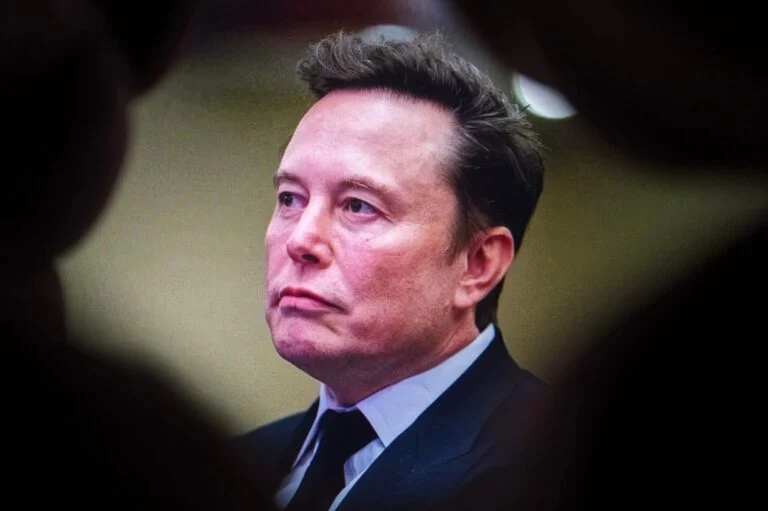
For nearly four years, Twitter shareholders have been waiting for a jury to tell them what most of them already believed: that Elon Musk used two tweets in May 2022 to deliberately drive down Twitter’s stock price, allowing him to pressure for a lower purchase price on his $44 billion acquisition of the platform.
On Friday morning, in a federal courthouse in San Francisco, they got their answer.
The nine-person jury found Musk liable for misleading investors with two tweets. The first, on May 13, 2022, stated the Twitter deal was “temporarily on hold” pending a review of the number of fake accounts on the platform.
The second, on May 17, doubled down on the bot concerns. Together, those posts sent Twitter’s stock sliding nearly 10% in a single session.
Investors who sold during that period lost real money based on what the jury unanimously concluded were materially false and misleading statements.
Total damages could reach $2.6 billion. Plaintiffs’ attorneys called it the largest securities jury verdict in United States history.
Musk’s net worth as of Friday: $814 billion. He called the verdict “a bump in the road.”
What the Jury Found, and What It Didn’t
The verdict was not a complete win for the plaintiffs. The jury rejected two of the four fraud claims brought against Musk.
Most significantly, jurors found that while Musk made false and misleading statements, he did not engage in a deliberate scheme to defraud investors.
That distinction matters legally. It means Musk misled people, but the jury stopped short of saying he did it as part of a calculated conspiracy to manipulate the market.
The podcast statement Musk made in May 2022, which plaintiffs had also argued was misleading, was treated by the jury as opinion rather than fact and was not found actionable.
The jury calculated damages at between $3 and $8 per share per trading day over roughly five months.
Plaintiffs’ attorneys said that formula amounts to approximately $2.1 billion in stock losses and another $500 million in options losses, for a combined potential payout of $2.6 billion.
Because this is a class action, the exact amount Musk must pay won’t be determined until shareholders submit individual claims at a later date.
Musk’s lawyers, Quinn Emanuel Urquhart and Sullivan, said they “look forward to vindication on appeal.”
They noted that Musk recently won two separate appellate victories in Texas and Delaware. The appeal in this case is expected to take years.
What the Two Tweets Actually Said
It is worth going back to the tweets themselves, because they are the entire case.
On April 14, 2022, Musk offered to buy Twitter for $54.20 per share, a significant premium. The deal was accepted.
Then, on May 13, 2022, he tweeted: “Twitter deal temporarily on hold pending details supporting calculation that spam/fake accounts do indeed represent less than 5% of users.”
The stock dropped almost 10% that day. Four days later, on May 17, he tweeted again, reiterating his concerns about bot counts.
The plaintiffs’ argument was straightforward: Musk knew, or should have known, that Twitter’s disclosed 5% figure was consistent with its SEC filings and that his public challenge to it, without any new factual basis, was designed to create an excuse to either walk away from the deal or renegotiate at a lower price. The jury agreed on the misleading tweets, though not the overall scheme.
Musk’s defense was equally straightforward: Twitter lied about its bots, he was simply asking legitimate questions, and his concerns turned out to be right. He spent more than a day on the witness stand maintaining that position.
The jury split the difference. He misled investors. He didn’t scheme to do it.
“Teflon Elon” Finally Gets Stuck
Court watchers have been calling Musk “Teflon Elon” for years. It’s a nickname he earned the hard way, by winning, repeatedly, in high-stakes litigation that observers expected him to lose.
He won the defamation case brought by the British cave diver he called a pedophile on Twitter.
He won the “funding secured” Tesla shareholder case, a nearly identical situation to this one, where the jury found his tweet claiming he had secured funding to take Tesla private was not fraudulent. He has beaten the SEC, beaten activist investors, beaten regulators in multiple jurisdictions.
Friday’s verdict is the first time a jury has made him pay for his social media behavior in a securities context.
It didn’t happen on the “funding secured” tweet. It happened on the Twitter bot tweets, which the Tesla case had effectively previewed as a potential liability.
The irony is that Musk won the Tesla case partly because the jury believed he genuinely thought he had funding secured.
He may lose this one precisely because the jury didn’t believe he genuinely thought Twitter’s bot count was problematic, or at least didn’t believe his public statements reflected his private views accurately.
Business litigation attorney Monte Mann put the verdict’s implications plainly: “The verdict sends a clear message.
If you move the market with your words, you own the consequences. The law has always prohibited misleading statements. What’s new is the scale and speed.”
The Numbers in Context
$2.6 billion is the largest securities jury verdict in US history, according to plaintiffs’ attorneys.
It is also, for Elon Musk specifically, less than 0.35% of his net worth. He makes more than that in a good week just from the appreciation of his Tesla stake.
For the investors who sold Twitter shares in May 2022 based on Musk’s misleading tweets, it is not nothing.
Teachers, nurses, firemen, pension fund holders, people with 401ks, as plaintiffs’ attorney Joseph Cotchett put it in his statement outside the courthouse. “This is a great example of what you cannot do to the average investor.”
Whether the appeal changes the outcome is a question for courts that haven’t been convened yet.
Whether $2.6 billion changes Musk’s behavior is a more immediate question, and the answer, given that he called it “a bump in the road” within hours of the verdict, is almost certainly no.
The Context That Makes This Larger Than Twitter
Musk is currently running DOGE, the government efficiency operation that has fired tens of thousands of federal workers and reshaped the agencies that regulate him.
His companies, Tesla, SpaceX, X, xAI, now merged into an interconnected empire, have more touchpoints with federal government than almost any private business in history.
The SEC, which regulates the securities laws just applied against him, has been led by Trump appointees who have been conspicuously gentle with Musk’s various Twitter-related disclosures since 2022.
Plaintiffs’ attorney Joseph Cotchett said outside the courthouse: “I think the jury’s verdict sends a strong message that just because you’re a rich and powerful person, you still have to obey the law, and no man is above the law.”
Musk’s lawyers walked out of the courthouse without comment. His X account posted nothing about the verdict. By late Friday afternoon, he had already posted seventeen times about other topics.
A bump in the road. Onward.
About the Author