
Mariya Sweetwyne has been a kidney disease researcher at the University of Washington since 2021. She runs a lab. She trains graduate students. She has spent five years studying why kidneys age the way they do, and what that means for the millions of Americans who develop chronic kidney disease as they get older.
She expects to shut her lab down by the end of this year.
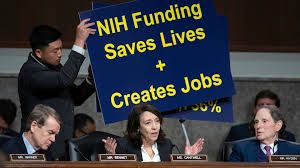
Not because the research dried up. Not because she ran out of ideas. Because the NIH grant program she had applied to was cancelled last spring, and the funding pipeline that would have kept her lab running has been slowly strangled by a combination of spending freezes, grant terminations, and policy disruptions that a new nationwide STAT survey describes as the worst grant-making bottleneck in the agency’s modern history.
Sweetwyne is not alone. Not even close.
What the Numbers Actually Show
STAT surveyed nearly 1,000 NIH-funded researchers across the United States. The results, published Thursday, are stark.
Halfway through fiscal year 2026, the NIH has awarded 74% fewer competitive grants than the average for the same period across the previous four fiscal years. The dollar value of those awards is 62% below historical norms. Congress actually increased the NIH’s budget to $48.7 billion for this fiscal year, a $415 million boost. But the White House’s Office of Management and Budget has restricted the agency’s ability to spend those funds, limiting expenditures to what OMB considers “essential.” Appropriated money and spent money, it turns out, are two very different things.
On top of that, a new funding policy now requires multi-year grants to be paid out entirely upfront rather than annually. A five-year, $500,000-per-year grant now costs $2.5 million in year one. The same annual budget funds far fewer new projects. NIH’s own projections estimate this policy will eliminate approximately 970 competing grants in fiscal year 2026 alone. That is 970 research programs that will not start. 970 labs that will not hire postdoctoral researchers. 970 lines of scientific inquiry that will simply stop.
The Brain Drain Is No Longer a Warning. It’s Happening.
For years, scientists and research advocates warned that sustained funding disruptions would push America’s best researchers to other countries. Europe and Canada, specifically, which have been aggressively recruiting US-based scientists with offers of stable funding and secure career paths.
That warning has become reality. A March survey published in Nature found that 75% of US scientists are now considering looking for jobs abroad, most commonly in Europe and Canada. Three quarters. The EU’s “Choose Europe for Science” initiative and France’s “Choose France for Science” program were explicitly designed to attract American scientific talent, and they are working.
Harvard has cut PhD enrollment in science by half. Boston University has paused enrollment in six fields. UMass Chan Medical School enrolled 15 PhD students in science last fall, down from 73 the year before. Brown has followed suit. These are not budget line adjustments. These are institutions signaling that they no longer expect the funding environment to support the researchers they would otherwise be training.
A Boston Children’s Hospital researcher, asked to describe the effect on science, put it this way: “This is like asking how dropping an atomic bomb on New York City will affect the future of Broadway musicals. This is a generational loss of innovation, technology, and economic power.”
Who Gets Hit Hardest
Early-career researchers are bearing the worst of it. Success rates for first-time investigators applying for their first independent grants dropped from 29.8% in fiscal year 2023 to 18.5% in 2025, with 2026 tracking worse still. These are the scientists most likely to abandon biomedical research entirely if they cannot secure their first award. Once they leave, they don’t come back.
The MOSAIC program, which supported postdoctoral researchers from diverse backgrounds as they transitioned to independent research roles, was terminated last year as part of a broad executive order targeting DEI efforts. More than 100 researchers had their funding cut short. One of them, a Hispanic scientist named Smith whose lab was studying PTEN, a tumor suppressor gene, and its connection to ovarian cancer, lost her award and found herself applying for new grants and job offers simultaneously, taking strange comfort in the fact that she wasn’t alone. The fact that “not being alone” is the comfort available tells you something about where things stand.
The NIH’s Own Defense
In response to the STAT survey, NIH said in an email that it “remains committed to promoting research that improves health by supporting the best and brightest scientists.” It also blamed Joe Biden for creating conditions requiring “drastic change.” Director Jay Bhattacharya told a House Appropriations Committee hearing this week that the agency will fully spend its 2026 budget by year’s end.
That may be technically true. But Jason Owen-Smith, executive director of the Institute for Research on Innovation and Science, told STAT that the survey findings suggest “deep-seated damage” that cannot be undone simply by spending a budget on time. “You can replenish money,” he said. “You cannot replenish five years of a scientist’s early career.”
What Gets Lost If This Continues
NIH funding is not an abstraction. Every single one of the 210 drugs approved by the FDA between 2010 and 2016 had NIH-funded research somewhere in its development. Every one. The agency supports more than 300,000 researchers across 2,500 institutions. In Massachusetts alone, NIH grants generated nearly $8 billion in economic activity and almost 30,000 jobs in 2024.
Stephen Jameson, president of the American Association of Immunologists, framed the competitive dimension clearly: “It’s wonderful that scientists share everything as new discoveries come out. But you tend to work with the people who are nearby. So if there’s a major discovery in another country, they will work with their pharmaceutical companies to develop it, not ours.”
The funding crisis isn’t just a health story. It’s a competitiveness story. A national security story. The US built its pharmaceutical and biomedical dominance over 80 years of sustained federal investment in basic research. It is possible to dismantle that dominance in a single administration. The STAT survey suggests it is already underway.
Mariya Sweetwyne is still showing up to her lab at the University of Washington. For now. Her graduate students are still coming in. Still working. Still hopeful, somehow.
But the money runs out this year. And when it does, whatever she was about to discover about why kidneys fail, stays undiscovered.
About the Author