
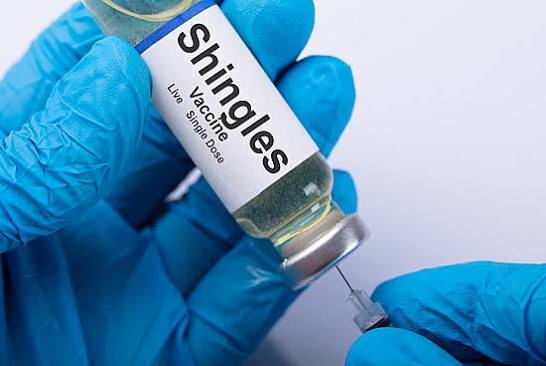
Most people think of the shingles vaccine as the shot their doctor reminds them about after 50. Get it, avoid a painful rash, move on. It has never been considered a heart medication.
A study being presented at the American College of Cardiology’s annual meeting later this month is about to change that conversation entirely.
Researchers analyzed data from more than 246,000 American adults with established heart disease and found that those who received the shingles vaccine were 46% less likely to suffer a major cardiac event in the following year compared to those who weren’t vaccinated.
They were 66% less likely to die from any cause. 32% less likely to have a heart attack. 25% less likely to have a stroke. 25% less likely to develop heart failure.
All from a vaccine most people already have access to and don’t bother getting.
Let’s Put Those Numbers in Context
A 46% reduction in major cardiac events is not a modest finding. It is enormous.
To understand the scale, consider what cardiologists hold up as their gold standard intervention for heart disease patients: quitting smoking. Stopping smoking after a heart attack reduces the risk of a second one by roughly 35 to 50%, depending on the patient and the study. That’s the comparison the researchers themselves reached for.
Lead author Dr. Robert Nguyen, a resident physician at UC Riverside, said the risk reductions seen in the shingles vaccine group are “comparable to what would be expected from quitting smoking.”
Cardiologists have spent decades trying to get patients to quit smoking. They have entire clinical protocols around it. Medications. Counseling. Nicotine replacement therapy. It is one of the hardest behavior changes in medicine.
Getting a shingles shot is one appointment.
Why Would a Shingles Vaccine Protect Your Heart?
Shingles is caused by the varicella-zoster virus, the same virus that causes chickenpox.
After you recover from chickenpox, the virus doesn’t leave. It hides in nerve tissue and can reactivate decades later as shingles. When it does, it causes not just the characteristic painful rash, but a systemic inflammatory response throughout the body.
That inflammation is the key. Shingles triggers a surge in inflammatory markers, including C-reactive protein and cytokines, that are directly associated with cardiovascular risk.
It also causes a hypercoagulable state, meaning the blood becomes more prone to clotting. Clots in coronary arteries cause heart attacks. Clots in cerebral arteries cause strokes.
The virus essentially creates the exact biological conditions that make cardiac events more likely.
By preventing shingles, the vaccine may also prevent the clot-related complications that follow it.
This is not a new theory. Previous research had already linked shingles to a significantly elevated risk of heart attack and stroke in the weeks and months after infection.
What this new study does is quantify the protective effect of vaccination at a scale nobody had studied before: nearly a quarter million patients, across seven years of data, looking specifically at the highest-risk group, people who already have established heart disease.
Who Was in the Study
The research used TriNetX, one of the largest medical record databases in the United States, covering millions of Americans.
Researchers pulled data on adults aged 50 and older who had been diagnosed with atherosclerotic cardiovascular disease, the condition where plaque builds up in the arteries and restricts blood flow, between 2018 and 2025.
They split the group in two: 123,411 people who had received at least one dose of either the Shingrix or Zostavax shingles vaccine, and an equal number who had not.
Both groups were matched as closely as possible for age, sex, other health conditions, and socioeconomic factors. Then researchers looked at what happened to each group in the following year.
The vaccinated group had dramatically better outcomes across every single cardiac measure. Not marginally better. Dramatically better.
Dr. Nguyen was clear about what he thinks this means for clinical practice: “This vaccine has been found over and over again to have cardioprotective effects for reducing heart attack, stroke and death. Looking at the highest risk population, those with existing cardiovascular disease, these protective effects might be even greater than among the general public.”
What the Study Doesn’t Prove, and Why That Matters
Before this gets misread: this is an observational study, not a randomized controlled trial.
That means the researchers didn’t randomly assign people to receive the vaccine or not. They looked back at records of people who had chosen to get vaccinated and compared them to people who hadn’t.
People who choose to get vaccinated tend to be more health-conscious in other ways too, which could inflate the apparent benefit. The researchers tried to adjust for this by matching groups on dozens of variables, but residual confounding is always a possibility in studies like this one.
What would settle the question definitively is a randomized controlled trial where patients are assigned to vaccine or placebo groups, and outcomes are tracked prospectively. That trial doesn’t exist yet for cardiovascular endpoints specifically. The researchers are calling for exactly that.
That caveat noted: this is still a study of nearly 250,000 patients with a consistent signal across every cardiac outcome measured. The effect size is large enough that even with some confounding, a meaningful protective effect is almost certainly real.
The biological mechanism is plausible and supported by prior research. The previous shingles-dementia study, published last year, showed a similar pattern using a natural experiment in Wales that largely eliminated confounding. The evidence is building in one direction.
The Inconvenient Timing
Here’s the thing that makes this finding particularly striking right now. RFK Jr.’s HHS has been casting doubt on vaccines broadly, cutting vaccine advisory panels, and creating a political environment in which vaccine hesitancy has risen sharply.
The childhood measles vaccine story has dominated the headlines. Meanwhile, vaccine uptake among older adults, including shingles vaccination rates, has been quietly declining alongside the broader erosion of vaccine confidence.
The CDC already recommends the shingles vaccine for all adults over 50. The ACC study provides the most compelling cardiac argument for that recommendation ever published. It is being released into an environment where vaccine uptake is falling and the government agency responsible for promoting it has been gutted.
Dr. Nguyen addressed this directly: “Vaccines are one of the most important medicines we have to prevent disease.
Sometimes patients are unsure about whether they should get a vaccine or not, particularly in an age of disinformation. These results provide another reason for them to elect to get the vaccine.”
About the Author