
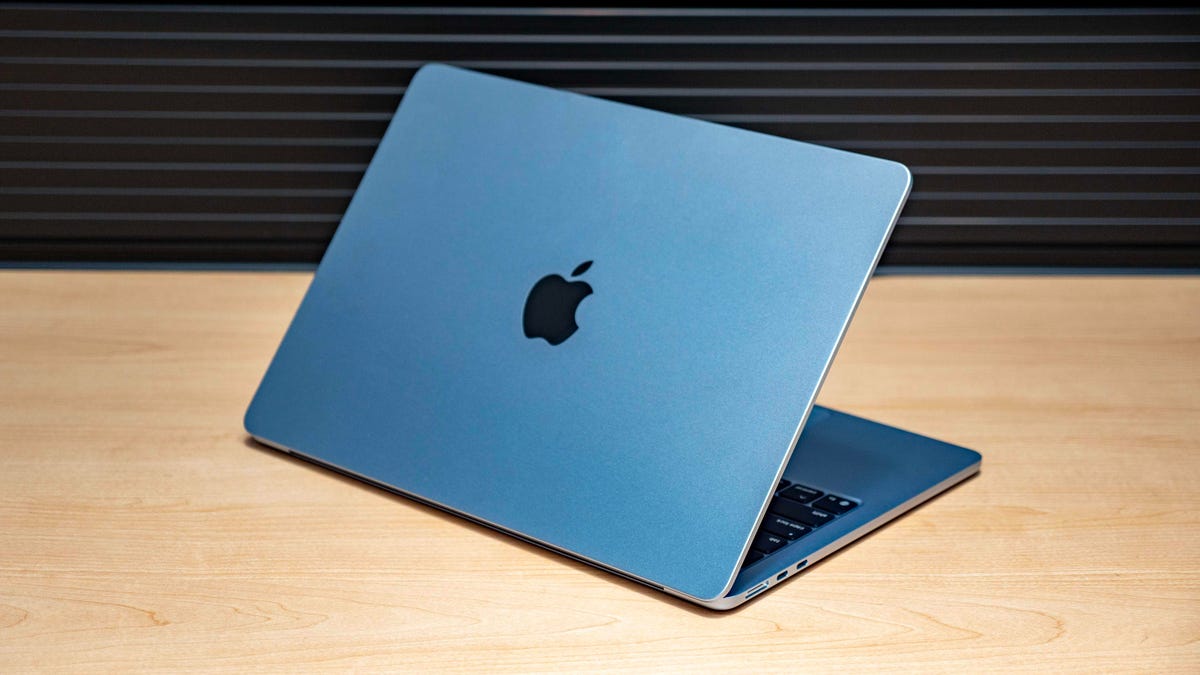
For the better part of a decade, Apple has had a problem it never fully acknowledged.
Its laptops were extraordinary. They were also completely unaffordable for the buyers who represent the largest segment of the global PC market: students, first-time laptop owners, people in emerging economies, anyone who needed a capable computer but couldn’t spend $1,099 and up.
Google filled that gap with Chromebooks. Microsoft filled it with budget Windows machines. Apple watched its market share in education and entry-level computing erode year after year and kept selling MacBook Airs at premium prices.
On March 11, Apple released the MacBook Neo.
It starts at $599. It is the cheapest laptop Apple has ever sold. And ten days after launch, it is selling faster than any Mac since the original M1 MacBook Air in 2020.
What Makes the MacBook Neo Different From Every Mac Before It
The MacBook Neo is the first Mac in history to run on an A-series chip, the same class of processor Apple uses in its iPhones and iPads, rather than the M-series chips found in the MacBook Air and MacBook Pro.
Specifically, it runs the A18 Pro, the same chip that powered the iPhone 16 Pro. That chip was already considered exceptionally fast when it launched last year.
In a laptop form factor, with better thermal management and a larger battery, it delivers up to 16 hours of battery life and performance that, according to Apple’s own benchmarks, beats the bestselling Intel-based Windows laptops at this price point by a significant margin.
The decision to use an A-series chip instead of an M-series chip is the entire reason the price is $599.
The A18 Pro costs less to produce than the M4 that goes into the MacBook Air. Apple passes that saving directly to the buyer. It is a straightforward move that Apple, for whatever internal reasons, resisted for years.
The hardware package around that chip is genuinely solid. A 13-inch Liquid Retina display with 2408 by 1506 resolution. 8GB of unified memory. 256GB or 512GB storage. A notchless display, the first on a MacBook since the 2022 13-inch MacBook Pro.
Available in four colors: Silver, Blush, Citrus, and Indigo, all with color-matched keyboards and feet. The whole thing starts at $499 for students through the Apple Education Store.
iFixit tore one down this week and called it Apple’s most repairable laptop in 14 years. Screwed-down battery tray. No parts pairing.
Modular ports and speakers. Screwed-down keyboard. That’s a significant shift for a company that spent years making its hardware deliberately difficult to repair.
The One Thing It Doesn’t Do
Before this sounds like an advertisement: there are real tradeoffs and they are worth knowing about.
The MacBook Neo has two USB-C ports, and only the left one supports external displays. That’s it. No MagSafe charging. No headphone jack. No SD card reader.
The display, while good, has a lower pixel density than the MacBook Air’s Liquid Retina display.
Early Geekbench benchmarks show the A18 Pro inside the Neo actually scores slightly lower on CPU performance than the A19 chip inside the $599 iPhone 17e, which is an odd situation where Apple’s cheapest Mac is outpaced on raw CPU benchmarks by Apple’s cheapest iPhone.
The MacBook Air starts at $1,099 and is a significantly more capable machine in almost every dimension. If you are doing video editing, running complex software, or need more than 8GB of RAM, the Neo is the wrong tool.
Apple has been clear about this: the Neo is for students, everyday users, and first-time Mac buyers. It is not trying to be the MacBook Air at half the price.
It also ships without a charger in the box. Apple’s environmental justification for this decision exists. The frustration of paying $599 and needing to separately purchase a USB-C power adapter also exists.
The March Apple Product Blitz, In Full
The MacBook Neo was the headline but it wasn’t the only thing Apple released this month. It was one of the most aggressive product launches Apple has mounted in years, spread across three weeks.
On March 2, Apple announced the iPhone 17e, the new iPad Air with M4, updated MacBook Air models with M5, and new MacBook Pro configurations with M5 Pro and M5 Max chips.
The iPhone 17e starts at $599 with 256GB of storage, double the entry storage of last year’s iPhone 16e at the same price.
It carries the A19 chip, Apple’s newest, with a C1X modem for improved energy efficiency, a 48-megapixel camera system, and MagSafe support. It comes in soft pink, black, and white.
The MacBook Air with M5 brings faster performance and double the starting storage compared to its predecessor.
The M5 Pro and M5 Max chips in the MacBook Pro line now feature 18-core CPUs, up from 14 and 16 cores in the previous generation. The M5 Max reaches up to 40 GPU cores.
On March 16, Apple added one more product: AirPods Max 2, the first update to Apple’s premium over-ear headphones since 2020. The new version carries the H2 chip from the AirPods Pro 2, which brings significantly improved active noise cancellation, Adaptive Audio, Conversation Awareness, Voice Isolation, and Live Translation.
The exterior design is essentially unchanged from the original, which is either a feature or a frustration depending on how you feel about the original’s design.
Apple also refreshed both Studio Display models. The base Studio Display stays at $1,599 with an improved webcam and upgraded speakers.
The new Studio Display XDR at $3,299 uses mini-LED backlighting, nearly twice the brightness of the standard model, and a 120Hz refresh rate. It effectively replaces the 2019 Pro Display XDR that Apple discontinued.
Why the MacBook Neo Is the Story That Matters Most
All of the March products are good. The MacBook Neo is historically significant.
Gartner projects PC prices will rise 17% across 2026 due to component shortages and tariff pressures. The International Data Corporation expects global PC sales to drop 11.3% this year.
Apple just released a $599 Mac, ten days before those price increases start biting, in the middle of a global economic environment where consumers are already under significant pressure from war-driven inflation and energy costs.
The Chromebook comparison is the one that matters most strategically. Google’s education machines dominate US classrooms and first-time buyer markets at $300 to $400.
Apple has always been priced out of that conversation. At $499 for students, the MacBook Neo is not quite in Chromebook territory, but it is closer than Apple has ever been.
It runs full macOS, not a stripped-down browser-based OS. It has Apple Intelligence built in. It is genuinely faster than any Chromebook at that price.
The first student who buys a MacBook Neo at 18 and uses it through university is a potential Apple ecosystem customer for the next 30 years. That’s the actual return on this product. Not the margin on a $599 laptop.
The lifetime value of the person who never needs to leave the Apple ecosystem because they got in the door when the price finally made sense.
Apple has been trying to figure out how to be both premium and accessible for years. The MacBook Neo is the clearest answer it has ever given.
About the Author