
Uber gave up on building its own self-driving technology in 2020. Sold the whole unit to Aurora for $4 billion and some equity and walked away.
It was, at the time, the right call. The technology wasn’t there. The costs were obscene. The timeline was infinite.
Six years later, Uber has a different problem. Autonomous vehicles are becoming real, and Uber isn’t the one building them. Waymo is. Tesla is. A dozen well-funded startups are.
If Uber doesn’t lock in the fleet, someone else will, and Uber’s entire business model, connecting riders to drivers, collapses the moment driverless cars become the cheaper option.
So Uber is doing what any company does when it doesn’t have the technology: it’s buying access to people who do.
On Thursday, Uber and Rivian announced a partnership to deploy up to 50,000 fully autonomous robotaxis on Uber’s platform over the next five years.
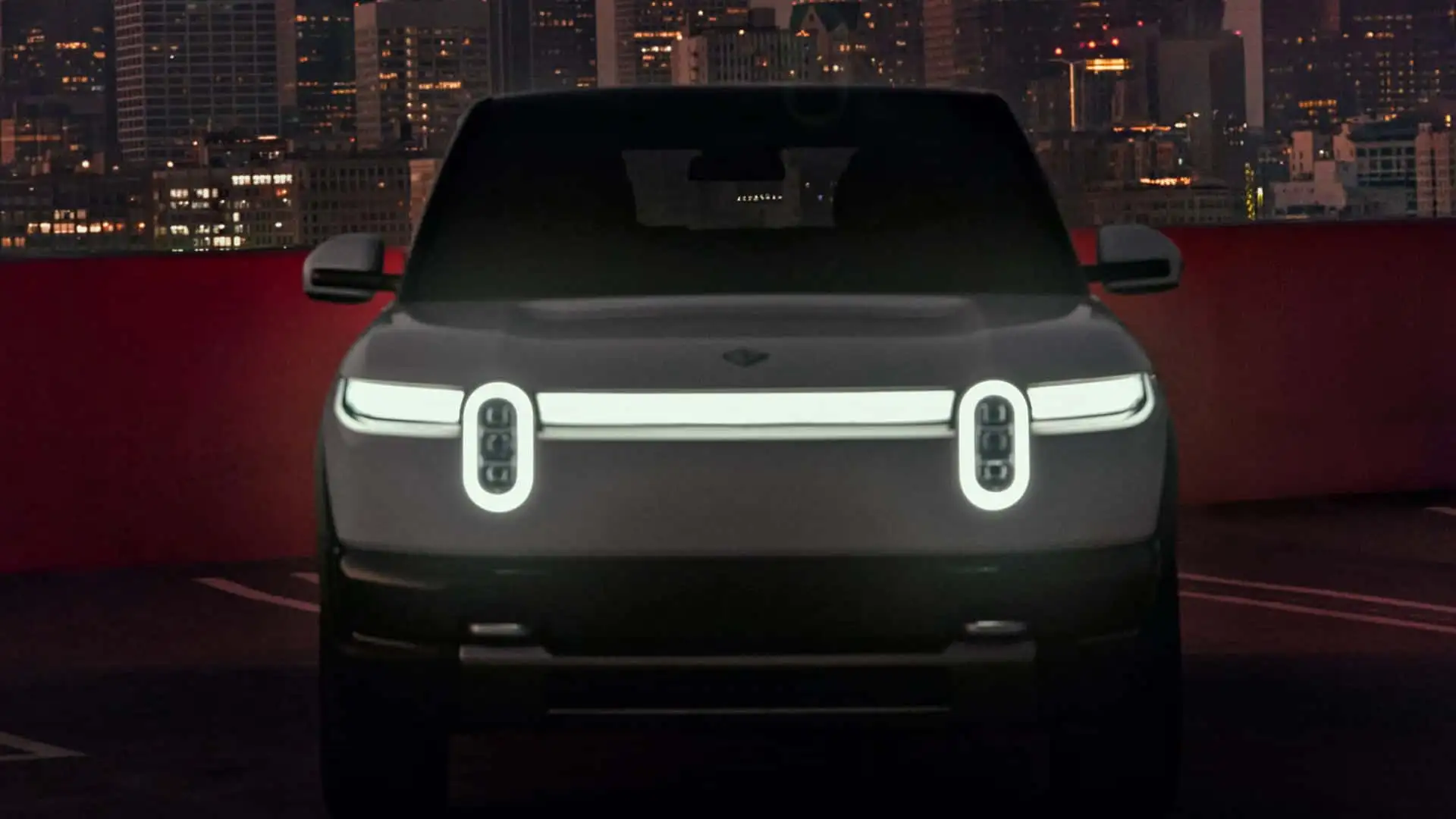
Uber commits up to $1.25 billion into Rivian through 2031. Rivian builds the autonomous R2 SUVs. The first 10,000 vehicles hit San Francisco and Miami in 2028.
The fleet scales to 25 cities across the US, Canada, and Europe by 2031. Available exclusively on Uber.
Rivian’s stock jumped 10% on the announcement before settling around 4% up. That’s a meaningful reaction for an EV maker that has spent three years trying to convince investors it has a path to profitability.
What Rivian Is Actually Bringing to This
Rivian is not a self-driving company. That’s the first thing to understand here.
It makes electric trucks and SUVs. Good ones, by most accounts. Its R1T pickup has been well-reviewed. Its R2 SUV, due to start deliveries next month at under $50,000, is the vehicle that will serve as the basis for this robotaxi fleet.
The company has an in-house inference platform called RAP1 and a multi-modal perception system. It has been quietly building its autonomy stack while its consumer vehicles gather real-world driving data.
But Level 4 autonomy, meaning the vehicle can handle all driving tasks in defined conditions without any human backup, is a different problem entirely from building a good electric truck.
TechCrunch noted that while the agreement is potentially lucrative for Rivian, it is “brimming with risk and challenges.” Rivian needs to add LiDAR to the R2 in 2027 and achieve specific autonomous milestones by specific dates.
If it misses those milestones, it doesn’t get the full $1.25 billion. The investment is contingent on performance, not promised upfront.
That structure actually makes sense. Uber isn’t writing a blank check. It’s writing a check with conditions, and the conditions are tied to whether Rivian can actually do the thing it’s claiming it can do.
That’s more disciplined than a lot of the autonomous vehicle investments of the last decade.
Uber’s Growing Autonomy Problem, and Why This Matters
The Rivian deal is not Uber’s first rodeo here. Not even close.
Uber has partnerships with more than 25 autonomous vehicle companies at this point.
It invested $300 million in Lucid six months ago for a separate robotaxi fleet based on Lucid’s Gravity SUV, built with Nuro’s autonomy technology. It is deploying Zoox vehicles in Las Vegas and Los Angeles.
It launched a robotaxi service in Las Vegas with Motional, Hyundai’s majority-owned AV subsidiary. It has committed to deploying robotaxis in 28 cities by 2028 using Nvidia-based systems.
The strategy is not to pick one winner and go all in. The strategy is to become the platform, the distribution layer, the network on top of which whichever autonomous vehicle company actually succeeds will have to operate.
Axios called it “defending its ride-hailing turf” by deploying AV partners’ vehicles on its own platform. That’s exactly right. Uber doesn’t need to win the autonomy race.
It needs to be the place autonomous vehicles go to find riders. Those are very different objectives.
Uber CEO Dara Khosrowshahi was pointed about why Rivian specifically: “We’re big believers in Rivian’s approach, designing the vehicle, compute platform, and software stack together, while maintaining end-to-end control of scaled manufacturing and supply chain.”
That’s the integrated stack argument. Instead of bolting third-party autonomy hardware onto an existing vehicle, Rivian is designing the whole thing from scratch with autonomy in mind.
That approach, in theory, produces a better product. It also produces a more complicated engineering challenge.
The Numbers Underneath the Headline
The $1.25 billion figure is the headline. Here’s what it actually means in practice.
Uber is committing $300 million immediately, subject to regulatory approval. That’s the real money on the table right now.
The remaining $950 million comes in tranches through 2031, each tied to Rivian hitting specific autonomous milestones.
The full $1.25 billion only materializes if Rivian delivers. If it doesn’t, Uber is out $300 million and a few years, not $1.25 billion.
On the vehicle side: 10,000 R2 robotaxis in phase one, starting 2028. Option to purchase up to 40,000 more starting in 2030.
Total potential fleet of 50,000 vehicles across 25 cities by 2031. Exclusively on Uber’s platform, which matters because it locks Rivian into a single distribution channel and gives Uber a guaranteed exclusive supply.
For Rivian, the data flywheel is the real prize beyond the investment dollars. Every autonomous mile driven generates training data for the self-driving models.
More vehicles on the road means more data means better models means safer autonomy means more vehicles.
Getting 50,000 vehicles deployed at scale through Uber’s network compresses years of data collection into a much shorter window than Rivian could achieve on its own.
The Risks Nobody Is Talking About
2028 is two years away. A lot can happen in two years.
Waymo’s fully driverless vehicles are already operating commercially in San Francisco, Los Angeles, Phoenix, and Austin right now, today, without a safety driver.
Tesla’s robotaxi service is launching in Austin in June. Both will be two years more advanced by the time Rivian’s first R2 robotaxis hit the road.
Rivian will be entering a market where the competition has had a significant head start and a lot more data.
There’s also the regulatory environment. San Francisco and Miami are the target launch cities, both of which have active robotaxi regulatory frameworks.
But expanding to 25 cities by 2031 means navigating 25 different regulatory environments across three countries.
Anyone who has watched the pace of AV regulation in the US knows that “by 2031” is optimistic language, not a guarantee.
And then there’s the broader market condition. Every other stock is on the downswing right now due to war-driven oil prices, recession fears, and general market stress.
The fact that Rivian’s stock jumped on this announcement while the rest of the market is sliding says something about how hungry investors are for a genuine positive story in the EV space.
Whether that enthusiasm translates into actual vehicle deployments by 2028 is a completely separate question.
What This Means for the Rider in the Back Seat
Here is the practical endpoint of all of this, the thing that matters most once the press releases and stock movements settle down.
If Rivian hits its autonomy milestones, and if the regulatory approvals come through, and if Uber’s deployment plans hold, then sometime in 2028 you will be able to open the Uber app in San Francisco or Miami, request a ride, and have a driverless Rivian R2 pull up to your curb. No driver. No tipping. No small talk. The car handles it.
That’s not science fiction anymore. Waymo is already doing it. The question is whether Rivian can get there at the scale Uber needs, on the timeline Uber wants, at a cost that actually makes the economics work for both companies.
RJ Scaringe, Rivian’s founder and CEO, said Thursday: “We couldn’t be more excited about this partnership with Uber. It will help accelerate our path to Level 4 autonomy to create one of the safest and most convenient autonomous platforms in the world.”
That’s the pitch. The proof is in 2028. Mark the date.
About the Author