Every few months, US prosecutors announce another chip smuggling bust. A few Chinese nationals. Some shell companies.
A handful of Nvidia chips moved through Malaysia or Singapore. Small enough to generate a press release and not much else.
Thursday’s indictment was different. Very different.
The US Attorney for the Southern District of New York charged the co-founder of Super Micro Computer, one of the most important AI infrastructure companies in the world, with conspiring to smuggle $2.5 billion worth of servers containing Nvidia’s most restricted AI chips to China. Y
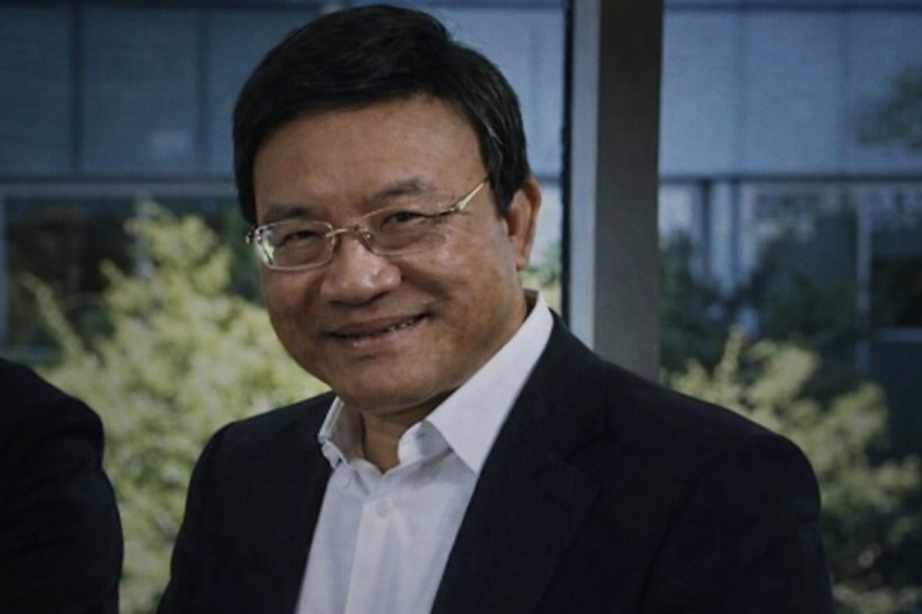
Yih-Shyan “Wally” Liaw, 71, was arrested in California on Thursday morning. Super Micro’s stock collapsed 25% before the market even opened.
This is the biggest chip smuggling case the US government has ever prosecuted.
And it goes right to the heart of one of the most consequential technology policy fights of the decade.
Who Got Charged and What They’re Accused Of
Three people are named in the indictment. Liaw, Super Micro’s co-founder and senior vice president of business development, is the biggest name. Also charged are Ruei-Tsang “Steven” Chang, a sales manager in Super Micro’s Taiwan office, and Ting-Wei “Willy” Sun, an outside contractor the DOJ describes as a “fixer.”
Liaw and Sun were both arrested Thursday. Chang is a fugitive, currently at large.
All three face three federal charges: conspiring to violate the Export Control Reform Act, conspiring to smuggle goods from the United States, and conspiring to defraud the United States. Each count carries a maximum sentence of up to ten years. Liaw is facing up to 30 years total if convicted on all counts.
How the Scheme Actually Worked
The operation wasn’t particularly subtle, but it was systematic. And it ran for at least two years.
Starting in 2024, the defendants allegedly directed an unnamed Southeast Asian company, referred to only as “Company-1” in the indictment, to place purchase orders with Super Micro as though the servers were destined for that company’s own operations.
The servers would be assembled in the US, shipped to Super Micro’s facilities in Taiwan, and then delivered to Company-1 somewhere in Southeast Asia.
From there, the scheme got messier. Company-1 would hand the servers off to shipping and logistics brokers who would allegedly remove all identifying packaging, put the servers in unmarked boxes, and ship them to their true destination: China.
The chips inside those unmarked boxes were Nvidia’s B200 and H200, the same chips that power the most advanced AI systems in the world and that the US government has specifically banned from sale to China without a license since October 2022.
The total value of servers that made it all the way to Chinese customers was roughly $510 million. The total value of servers that moved through the scheme across all stages was $2.5 billion.
The prosecution’s evidence includes text messages. In one, Liaw asked an executive at Company-1 for monthly forecasts of how many chips could be moved before an upcoming export rule tightened: “Roughly how many you can take by January? Feb? March? April? Just roughly forecast will be fine.”
In another, when a broker sent Liaw a news link about Chinese nationals being arrested for chip smuggling, Liaw allegedly responded with sobbing emojis. He apparently found it funny.
He is not laughing now.
Why Super Micro and Why Now
Super Micro is not a household name outside the tech industry. Inside it, the company is enormous.
It assembles AI servers containing Nvidia’s most powerful chips and accounts for roughly 9% of Nvidia’s total revenue.
It helped Elon Musk build the Colossus AI cluster, the largest single AI compute installation in the world, in just 122 days.
Its most recent earnings call featured $13 billion in orders for Nvidia’s Blackwell product line. This is a company sitting at the absolute center of the AI infrastructure buildout.
The timing matters too. A fifth of the total shipments by value allegedly occurred in just a few weeks last year, right before new rules were set to require export licenses for AI chip shipments to Southeast Asia.
The defendants allegedly saw the window closing and moved fast to get as many chips through as possible before it shut.
Super Micro itself is not named as a defendant. The company said Thursday that Liaw and Chang have been placed on administrative leave and that Sun’s contracting relationship has been terminated.
Its statement described the alleged conduct as “a contravention of the Company’s policies and compliance controls.” That is the kind of sentence a legal team writes at two in the morning.
The Export Control Policy Behind All of This
To understand why this case matters beyond the criminal charges, you need to understand what the US has been trying to do with AI chip export controls since 2022.
The Biden administration’s position, continued and expanded by Trump, is that advanced AI accelerators, specifically Nvidia’s most powerful GPUs, represent a strategic national security asset.
China cannot develop frontier AI models, autonomous weapons, or advanced surveillance systems at scale without the compute power those chips provide.
Restricting their export to China is, in theory, a way of maintaining a US advantage in the technology that is increasingly defining military and economic power.
The problem is that the restrictions are only as effective as enforcement allows.
A Financial Times investigation last year estimated China secured around $1 billion in advanced AI processors in just the three months after export controls were tightened.
Chris McGuire of the Council on Foreign Relations said the indictment reveals “glaring loopholes” in the transshipment pathway through Southeast Asia that the government has not yet fully closed.
Nvidia’s response was appropriately careful: “Strict compliance is a top priority for Nvidia. We continue to work closely with our customers and the government on compliance programs as export regulations have expanded. Unlawful diversion of controlled US computers to China is a losing proposition across the board.”
Nvidia itself is not accused of any wrongdoing. Its chips were the target. Its customer allegedly moved them.
What Happens to Super Micro Now
The stock is down 25%. That’s not a minor correction. That is a market saying it does not know how much worse this gets.
Super Micro has had a turbulent recent history even before Thursday.
Last year the company faced an accounting scandal, a short-seller report alleging financial irregularities, and a delayed annual filing that triggered a Nasdaq delisting warning before the company eventually filed its audited accounts and avoided delisting.
It entered 2026 recovering. It is not recovering now.
The questions the market is asking are legitimate ones. If the co-founder was running a $2.5 billion smuggling operation for two years, what else wasn’t being disclosed? How thorough were the compliance controls that allegedly failed to detect this? Are there other customers, other schemes, other indictments coming?
The DOJ has said there have been several smaller chip smuggling arrests in recent months, and that Thursday’s indictment is part of an accelerating enforcement campaign. Super Micro may not be the last major name in that campaign.
Jensen Huang, who has publicly touted his close relationship with Super Micro’s leadership and whose chips are the center of this entire story, said nothing publicly Thursday.
Nvidia’s market cap is $4 trillion. It will survive this. Whether Super Micro does, in anything like its current form, is a genuinely open question.
About the Author