The Iran war hit its one-month mark on Friday.
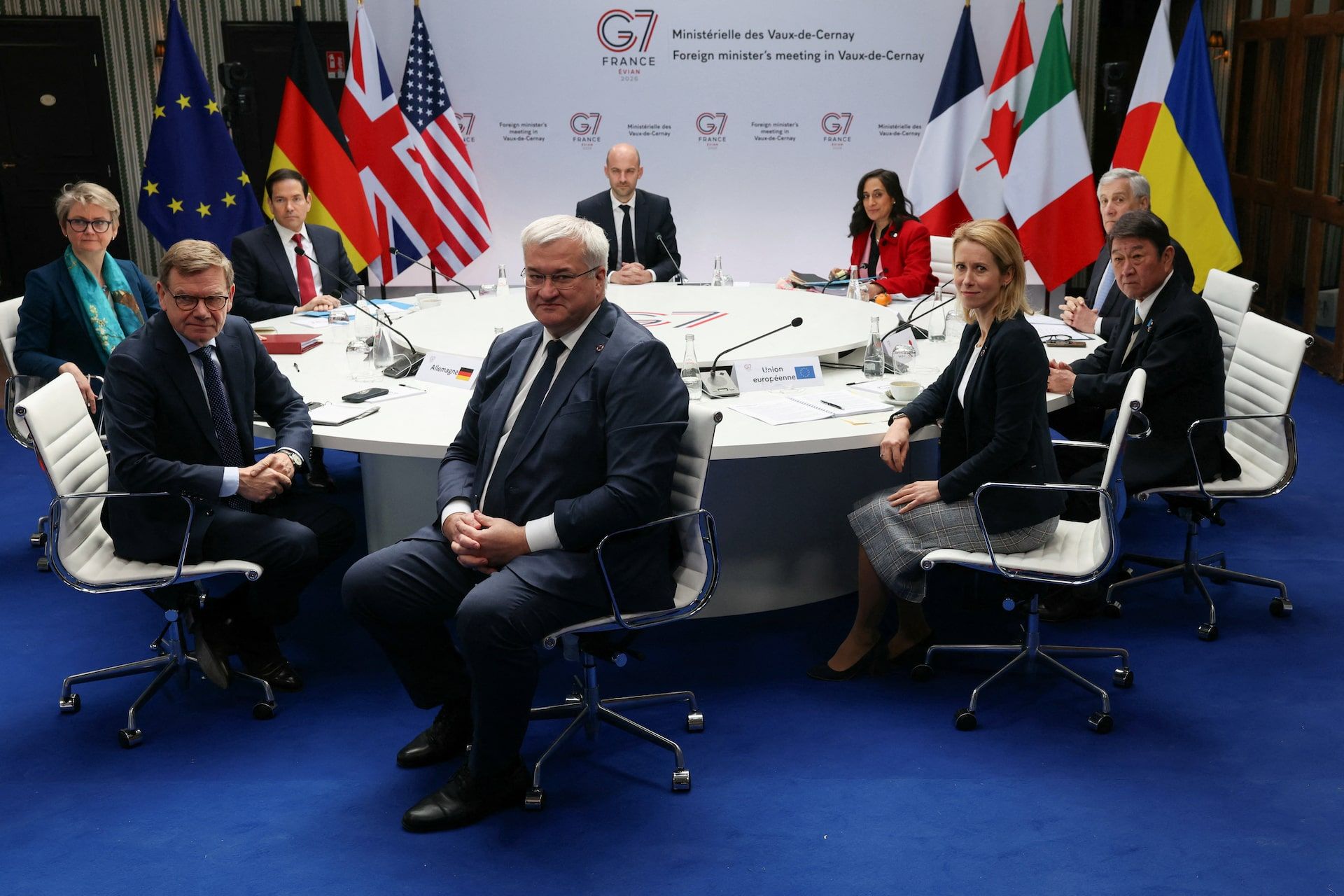
To mark it, the world’s major democratic allies gathered in a French abbey outside Paris for a G7 emergency meeting of foreign ministers.
Secretary of State Marco Rubio sat across from his counterparts from the UK, France, Germany, Japan, South Korea, Canada, Italy, Saudi Arabia, Brazil, India, Ukraine, and the EU.
The message they delivered to him was consistent and direct.
Nearly a month into this conflict, what exactly is the United States trying to achieve? And how does it plan to get there?
Rubio’s answer: the war will last another two to four weeks. Ground troops are not necessary. Diplomacy is being pursued. He asked for patience.
The allies were not fully satisfied.
What the 15-Point Plan Actually Contains
This week, Iran officially confirmed it received a 15-point plan from the United States through Pakistan as an intermediary.
Pakistani and Egyptian officials who were briefed on the plan told the Associated Press what it contains.
The US is asking for sanctions relief in exchange for Iran rolling back its nuclear program. It wants limits on Iran’s missile stockpile. It wants the Strait of Hormuz permanently reopened.
It wants restrictions on Iran’s support for armed proxy groups across the region. It also includes provisions for stronger international nuclear monitoring by the IAEA.
Iran’s response was swift and dismissive.
A high-ranking Iranian diplomatic source told Al Jazeera the plan was “extremely maximalist and unreasonable.”
“It is not beautiful, even on paper,” the source said. The source called it “deceptive and misleading in its presentation.”
Iran’s military spokesman was even harsher. “Do not call your defeat an agreement,” he said. “Have your internal conflicts reached the point where you are negotiating with yourselves?”
Iran’s own counter-proposal has five conditions: a complete end to attacks, concrete guarantees preventing future war, compensation for all damages, a comprehensive ceasefire across all fronts, and formal recognition of Iran’s sovereignty over the Strait of Hormuz.
That last demand is a non-starter for the US and every maritime nation that uses the Strait.
Recognizing Iranian sovereignty over an international shipping lane that carries 20% of the world’s oil is not something any US administration could agree to.
It may not be intended as a real negotiating position. It may be designed to make the US look like the unreasonable party.
The Gap Between What Trump Says and What Iran Says
Trump has said negotiations are “under way.” He says Iran wants a deal “so badly” but is afraid to say so publicly.
Iran says there are no negotiations. It says messages have been exchanged through mediators. It says the US is confusing messaging with talking.
Pakistan’s foreign minister provided the clearest account of reality this week. He confirmed that Pakistan has been “facilitating indirect talks” between the US and Iran by relaying messages. He said the US had shared the 15 points, which Iran is now reviewing.
That is indirect messaging. Not negotiation. The distinction matters because proper negotiations involve both sides sitting at a table, exchanging positions, and making concessions in real time.
What is happening now is more like two people in separate rooms, passing notes through a hallway, each one insisting they are not really talking to the other.
Iran’s Foreign Minister Abbas Araghchi said Washington’s recent shift toward diplomacy “amounts to an acknowledgment of failure” after previously demanding unconditional surrender. That framing is designed for domestic Iranian consumption. It also happens to contain a kernel of truth.
The War Kept Going While Talks Were Discussed
While diplomats exchanged statements about negotiations, the fighting did not slow down.
Iran fired six separate ballistic missile salvos at Israel on Friday. Israel launched an “extensive” wave of strikes against Hezbollah infrastructure in Beirut’s Dahiyeh district.
Israeli forces bombed the Arak heavy water reactor in Iran, issuing an evacuation warning before the strike. Iran’s state media said there were no casualties and no radiation danger.
The Pentagon confirmed it is sending up to 10,000 additional troops from the 82nd Airborne Division to the Middle East.
Israel is reportedly speeding up its strikes inside Iran over the next 48 hours, trying to destroy as many of Iran’s arms factories as possible before any ceasefire is declared.
That is what a war being fought while simultaneously being negotiated looks like. Both sides are trying to improve their position before any deal is reached. That means more bombing, not less, in the short term.
The Allies Are Running Out of Patience
At the G7 meeting in Paris, the frustration was visible.
British Foreign Secretary Yvette Cooper said Iran was “holding the global economy hostage” by blocking the Strait. She urged a “swift resolution.”
Germany’s new foreign minister Johann Wadephul called for de-escalation. France’s Jean-Noel Barrot said Europe wants diplomacy to succeed.
But they are also pushing back on the US directly. European governments are pressing Rubio for clear strategic objectives.
What does the United States want from Iran at the end of this? What does winning look like? What benchmarks signal that the war has achieved its purpose?
Rubio said the war would last two to four more weeks and asked allies to stay the course. The allies agreed to a joint statement calling for Iran to reopen the Strait and condemning Iran’s attacks on civilian infrastructure.
They did not agree to send ships. They did not agree to military participation. The G7 meeting confirmed a clear divide: European countries pushing for de-escalation, the US keeping military options open.
The Strait Is Cracking Open, Slightly
There is one genuinely positive development buried inside this week’s chaos.
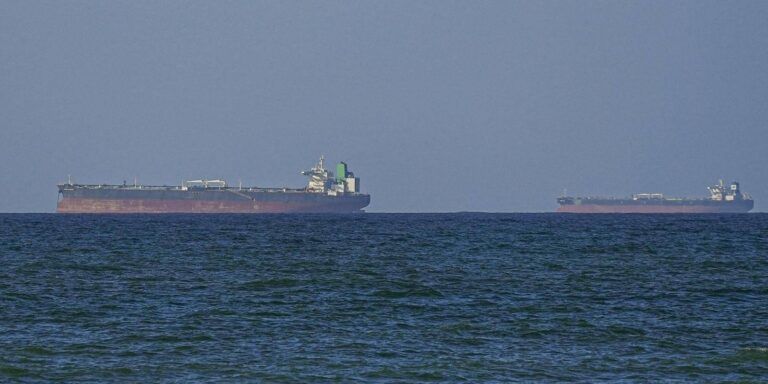
Iran announced that “non-hostile” ships may now transit the Strait of Hormuz if they coordinate with Iranian authorities first.
More vessels have started crossing. The tanker captain who was stranded for three weeks finally got safe passage with a military escort from an undisclosed regional authority.
The conditions are far from normal. Iran is reportedly charging fees for passage, which the Gulf Cooperation Council says violates international law.
Iran’s parliament is working on legislation to formally codify its control over the Strait and create a permanent revenue stream from the fees. That is not reopening the Strait. That is monetizing its blockade.
Brent crude fell to around $100 a barrel this week as some supply began moving again. It had been above $114 just days earlier.
The drop is real but fragile. It depends on Iran continuing to allow passage. Iran has shown it can change that policy in hours.
Richard Haass Puts the Odds Plainly
Richard Haass, the former president of the Council on Foreign Relations, published an assessment Friday that deserves a wide reading.
He laid out the possible outcomes: regime change, Iranian capitulation, uncontrolled escalation, or formal peace. He said all four were possible. He described all four as unlikely to arrive cleanly.
“Reaching a comprehensive peace agreement will require realism on all sides,” he wrote. “A stable peace looks to be a long shot at this point.”
He also described a fifth outcome that nobody wants to say aloud: a long, grinding, inconclusive conflict that ends not with a deal but with mutual exhaustion.
Both sides too damaged to keep fighting, neither side willing to call it a victory, the world paying the economic price indefinitely.
The G7 met in a French abbey on the one-month anniversary of the war. They issued a joint statement. The fighting continued. The peace plan was called “not beautiful.” The Strait cracked open slightly. The oil price fell $14 and then held.
That is where things stand after 28 days. Not victory. Not peace. Not full escalation. Just the war, still going, with everyone trying to figure out what comes next.
About the Author