![1/3]Futures-options traders work on the floor at the New York Stock Exchange's NYSE American (AMEX) in New York City, U.S., January 15, 2026. REUTERS/Brendan McDermid](https://www.factlad.com/wp-content/uploads/2026/03/24HN4NIXOBOK7EPY7RXN35BMGA.jpg)
Five weeks in a row. That is how long Wall Street has been falling.
On Friday, the Dow Jones Industrial Average dropped 793 points to close at 45,166. That pushed it into official correction territory, meaning it has now fallen more than 10% from its recent peak.
The S&P 500 fell 1.67% to 6,368, a seven-month low. The Nasdaq dropped 2.15% and is now nearly 13% below its all-time high set in October. The broad market has posted its biggest monthly slide since December 2022.
But the number that shook markets most on Friday had nothing to do with stocks. It was a probability: 52%.
For the first time this year, futures traders now believe it is more likely than not that the Federal Reserve will raise interest rates before the end of 2026.
That is a stunning reversal. At the start of the year, traders were pricing in three or four rate cuts. Now they are pricing in a rate hike. The Iran war, oil above $110, and sticky inflation did that in four weeks.
Why a Rate Hike Would Be Devastating Right Now
The Federal Reserve has one job when the economy slows: cut rates to stimulate growth. It has another job when inflation rises: raise rates to cool prices.
Right now, both are happening at the same time. That is called stagflation, and it is the economic condition that central banks dread most.
The economy is slowing. GDP growth was revised down to just 0.7% in the fourth quarter of 2025. Consumer confidence hit a four-year low this month. Job growth has turned negative in five of the last nine months.
At the same time, inflation is rising. Oil is above $110 after the Iran war drove it from $65 in February.
The University of Michigan’s consumer survey showed one-year inflation expectations climbing to 3.8% in March. The Producer Price Index has run hot for two straight months.
The Fed cannot cut rates into rising inflation without making inflation worse. It cannot raise rates into a slowing economy without making the slowdown worse.
Ann Miletti of Allspring Global Investments put it bluntly: a rate hike would be “market shaking.”
What Sent Stocks Lower on Friday
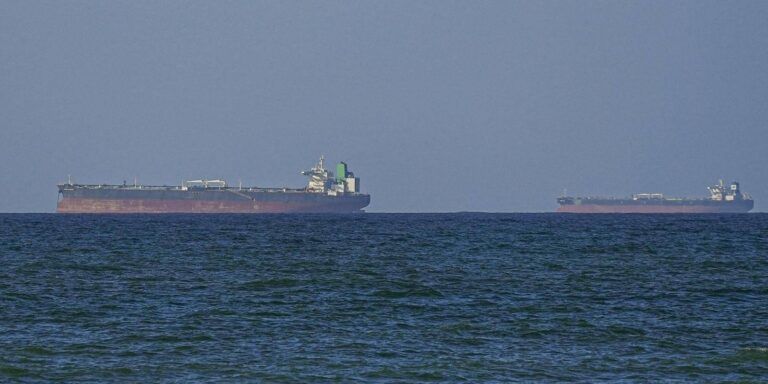
The day started with hope. Trump’s claim of peace talks with Iran sent oil lower on Thursday. Markets bounced briefly on Friday morning as the Strait of Hormuz appeared to be partially opening.
Then Brent crude climbed back above $110. New incidents in the Strait were reported. Investors who had briefly bought the dip sold again.
The University of Michigan consumer sentiment reading came in at 53.3, below the expected 54.0 and down sharply from February. The expectations component fell to 51.7, its lowest level in years.
Consumer spending accounts for roughly 70% of the US economy. When consumers feel this bad about the future, they spend less. When they spend less, the economy contracts. When the economy contracts and prices are still rising, the Fed is trapped.
Goldman Sachs revised its growth forecast lower again. Goldman Sachs also said the incentives for both Iran and Israel “do not necessarily align with a quick end” to the conflict, which is a polite way of saying: this is not ending soon, and markets need to price that in.
The Numbers Week by Week
The five-week losing streak tells a clear story when you line it up.
The Dow is now down 9.2% from its peak, officially in correction. The S&P 500 is down 10.7% from its January high.
The Nasdaq is down 12.9%, one bad day away from a full correction. The Russell 2000, which tracks smaller companies, is down 16% from its high and now officially in a bear market.
Every major sector has lost ground. Energy is the only one up year to date, because high oil prices are good for oil companies. Everything else is red.
The S&P 500 is down 6.8% in March alone. That would be the worst monthly performance since December 2022 if it holds through the end of the month. Trading resumes Monday. The end of the month is Tuesday. There are two more sessions to change that.
TSA Gets Paid; One Relief in a Bad Week
Friday was not entirely bleak. One piece of genuinely positive news arrived at the end of the day.
Trump signed an executive order directing TSA officers to receive paychecks. The Department of Homeland Security confirmed that security workers “should begin seeing paychecks as early as Monday, March 30.”
TSA officers have been working without pay since the partial government shutdown began on February 14. That is six weeks without a paycheck for essential airport workers. Callout rates hit record highs. Airports reported two to four hour security lines. Spring break travel became a nightmare.
The executive order does not fund the full DHS. It is a targeted fix for one of the most visible symptoms of the shutdown. The underlying budget standoff between Congress and the White House is not resolved.
Shares of Clear Secure, the airport identity verification company that directly competes with TSA for screening services, dropped 11% on the news. The market figured that a paid TSA is better competition for Clear than an unpaid, understaffed one.
What Investors Are Watching Next Week
The next few days will set the tone for April.
On Tuesday, the government releases its final estimate for fourth quarter 2025 GDP. It is expected to be revised down from the already-weak 0.7% reading. If it comes in below zero, the recession conversation becomes impossible to ignore.
Also on Friday, PCE inflation data for February comes out. PCE is the Fed’s preferred inflation measure. If it runs hotter than expected, the 52% rate hike probability climbs higher. If it comes in cool, it falls back. There is no outcome that is unambiguously good.
And hanging over all of it: Trump’s five-day ultimatum to Iran expires Saturday morning. If power plant strikes happen over the weekend, oil could gap up sharply when markets open Monday. If a deal appears, oil could fall dramatically.
Either way, the first trade Monday morning will be a reaction to whatever happened over the weekend in the Middle East.
That is the new normal for markets. Every weekend is a geopolitical event. Every Monday is a response.
About the Author