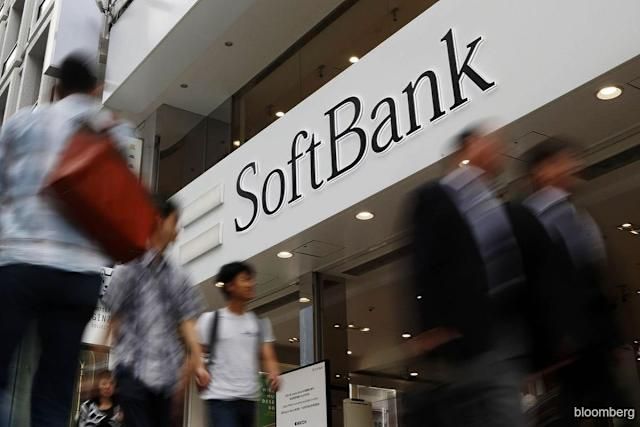
On Friday morning, SoftBank confirmed something that made even seasoned financial analysts do a double take.
The Japanese investment giant borrowed $40 billion in a single bridge loan to fund its growing stake in OpenAI.
Forty billion dollars. In one loan. Unsecured. Due in 12 months.
That last detail is the one that matters most. When banks lend $40 billion with no collateral and only a one-year repayment window, they are betting that OpenAI will go public before the loan comes due. That is not speculation. That is what the structure of this deal says.
The banks involved know what they are doing. JPMorgan Chase. Goldman Sachs. Mizuho. Sumitomo Mitsui. MUFG. These are not institutions that lend $40 billion on a handshake. They lend it because they believe a massive liquidity event is coming that will allow SoftBank to repay it comfortably.
The OpenAI IPO, one of the most anticipated stock listings in tech history, is expected before the end of 2026. Friday’s loan just gave it a deadline.
What SoftBank Is Actually Buying
This is not SoftBank’s first bet on OpenAI. Not even close.
Last month, SoftBank committed $30 billion to OpenAI through its Vision Fund 2 as part of OpenAI’s record-breaking $110 billion funding round. That round valued OpenAI at $840 billion.
Before that, SoftBank had already invested more than $30 billion in OpenAI. Friday’s new $30 billion brings SoftBank’s total stake to approximately $64.6 billion, representing roughly 13% of OpenAI.
SoftBank has sold assets to fund this. It offloaded part of its Nvidia stake. It sold portions of its portfolio companies. It is increasingly restructuring itself as an AI-focused holding company with OpenAI at its centre.
Masayoshi Son, SoftBank’s founder, has been saying for years that AI will be the most transformative technology in human history. He is now personally staking more than $64 billion on being right.
Why $40 Billion Is a Record — and Why That Matters
This is SoftBank’s largest single dollar-denominated loan ever.
For context, the entire GDP of Slovenia is roughly $65 billion. SoftBank borrowed 62% of that in one transaction on a Friday morning.
The loan is unsecured, which means it is backed by SoftBank’s general creditworthiness and reputation rather than any specific asset. Normally, lenders demand collateral for loans this large. The fact that five of the world’s most sophisticated banks agreed to lend without it says something specific about how they view SoftBank’s ability to repay.
It says they are confident OpenAI’s IPO will happen within 12 months.
If OpenAI goes public at anywhere near its current $840 billion private valuation, SoftBank’s 13% stake would be worth roughly $109 billion. That is enough to repay the $40 billion loan with $69 billion left over — before counting the appreciation in SoftBank’s other holdings.
The OpenAI IPO Timeline
OpenAI has been on a path toward a public listing for over a year. In late 2025, it completed a corporate restructuring that converted it from a nonprofit-controlled entity to a more conventional for-profit company — a prerequisite for going public.
The restructuring unlocked SoftBank’s original $22.5 billion commitment, which had been conditional on that change being completed.
CNBC and several other outlets have reported that OpenAI is targeting a public listing before the end of 2026. No formal S-1 filing has been made. No exchange or underwriter has been officially named. But the infrastructure for a listing is being put in place.
The $40 billion bridge loan matures in March 2027. TechCrunch noted that the 12-month maturity is “a signal that the lenders believe OpenAI’s highly anticipated public listing will indeed come later this year.”
If the IPO happens in the second half of 2026, SoftBank will use the proceeds to repay the loan before it matures. If it does not happen, SoftBank will need to either refinance the loan or sell assets. That scenario is manageable but far less elegant than an IPO-fuelled payoff.
The Risks Nobody Is Ignoring
Even the most bullish OpenAI observers acknowledge the risks here.
OpenAI remains heavily dependent on Microsoft for computing infrastructure and financing. That relationship has been under strain as OpenAI pursues independence through its own data centers. The Oracle partnership that was recently announced is partly about reducing that dependency, but it is not complete.
OpenAI also faces ongoing legal battles with Elon Musk’s xAI, which has challenged the for-profit restructuring in court. That litigation has not resolved.
And then there is the global chip shortage driven by the Iran war. The Strait of Hormuz disruption has affected helium supply, which is critical for semiconductor manufacturing. If chip production falls short of what OpenAI needs to train its next models, the company’s growth trajectory slows — and with it, the IPO valuation.
SoftBank knows all of this. It borrowed $40 billion anyway.
What This Means for the AI Race
The scale of SoftBank’s commitment is itself a market signal.
OpenAI is now the most capitalized private AI company in history by a significant margin. It has $840 billion in implied valuation. It has $110 billion raised in a single funding round. It has the world’s most recognizable AI brand in ChatGPT. And it has a Japanese investment conglomerate borrowing $40 billion on the assumption that the company will be worth even more when it goes public.
Every other company in the AI ecosystem — Anthropic, xAI, Mistral, Cohere, and the dozens of well-funded startups trying to compete — is watching this and recalibrating. The bar for competing with OpenAI is not just model quality anymore. It is balance sheet size. It is compute access. It is infrastructure scale.
SoftBank’s $40 billion bet makes the AI race more capital-intensive and more concentrated at the top in a single day.
Son has been called reckless for big bets before. He bet big on WeWork and lost badly. He bet big on Alibaba in 2000 and turned $20 million into $60 billion.
The AI bet is the largest of his career. The 12-month clock started Friday morning.
About the Author