McCormick is the company that makes Old Bay, Frank’s RedHot, French’s Mustard, Lawry’s, and Cholula hot sauce.
Its market cap is $14.5 billion. It has been around since 1889 and it sells a lot of spice tins in red-and-white packaging.
On Friday, it made an offer to buy a $33 billion business from one of the largest consumer goods companies on earth.
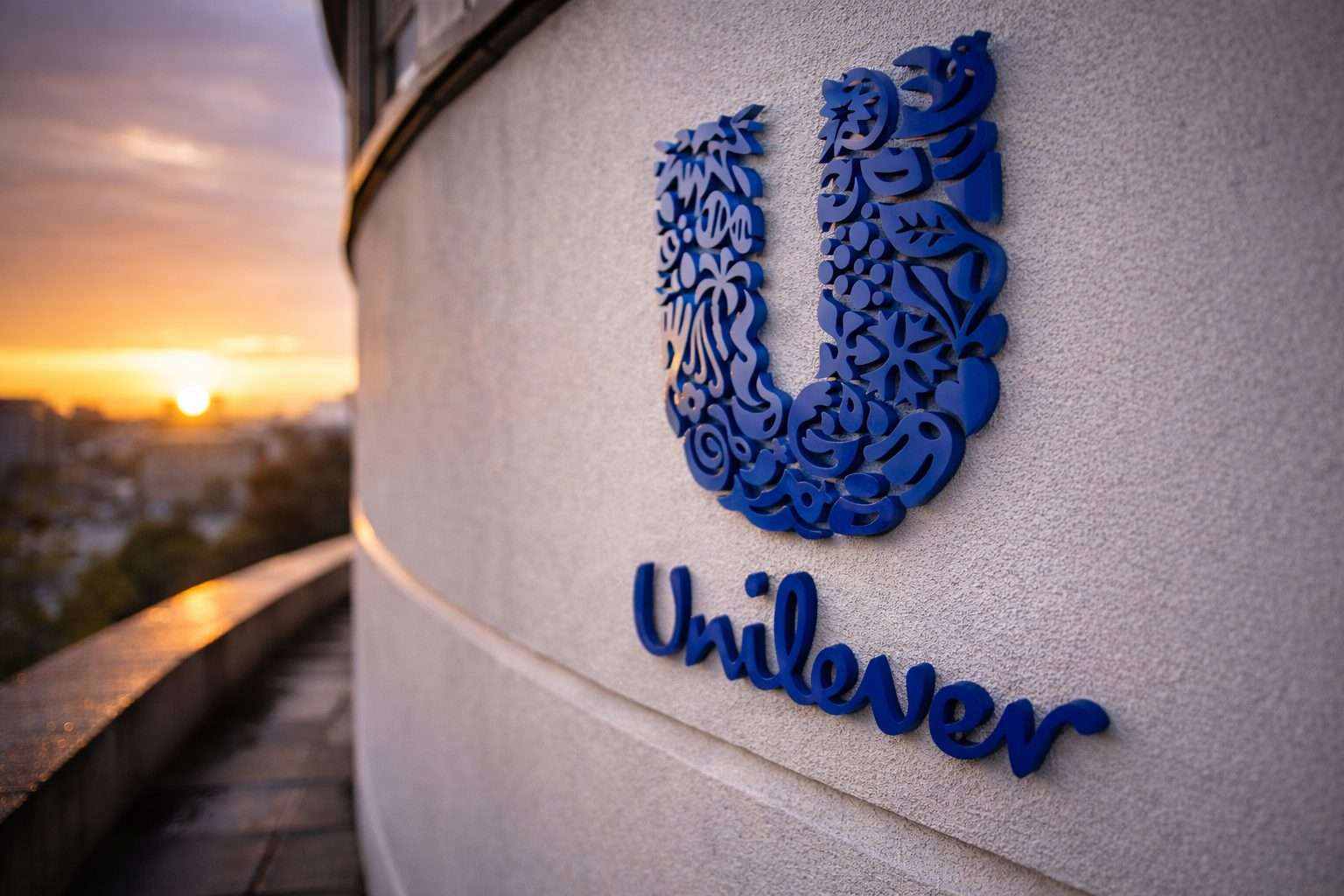
Unilever confirmed it is in talks to sell its entire food division to McCormick, a business that includes Hellmann’s mayonnaise, Knorr soups and seasonings, Marmite spreads, Pot Noodle, and a portfolio of other brands that generated nearly $15 billion in annual revenue last year.
If it closes, it would be the largest acquisition in McCormick’s 137-year history.
It would also create a condiment and flavoring empire with no real precedent in the packaged food industry.
The Math Problem Nobody Is Ignoring
The first thing anyone notices about this deal is the size mismatch.
McCormick’s entire market capitalization is $14.5 billion. The business it is trying to buy is valued at $33 billion. That is more than twice McCormick’s own worth.
How does a $14.5 billion company buy a $33 billion division from a company 10 times its size?
The early indication is that the deal would be structured primarily as an all-stock transaction, meaning McCormick would issue new shares to Unilever rather than paying cash.
That structure avoids the crushing debt load a cash deal would require, but it significantly dilutes existing McCormick shareholders and effectively hands Unilever a major stake in the combined business.
BNP Paribas analysts said the deal “makes sense” strategically but flagged that structure as a “crucial” consideration. McCormick’s stock fell as much as 2.6% on the news before recovering slightly, which is the market saying: we like the logic, we’re nervous about the financing.
Why Unilever Wants Out of Food
Unilever has been walking away from food for a decade. Slowly, systematically, and with increasing urgency.
In February 2025, it listed its ice cream business, including Ben & Jerry’s, on the Amsterdam Stock Exchange, separating it from the rest of the group. That was the biggest step. This would be the last one.
The logic is clean. Unilever’s personal care brands, Dove, Vaseline, Axe, Lux, Sunsilk, are growing faster than its food brands. They carry better margins. They face fewer headwinds from the “clean eating” movement and consumer shifts away from processed food.
They travel better across emerging markets, which is where Unilever’s real growth opportunity lives.
Food, by contrast, is getting harder. Consumers are increasingly skeptical of ultra-processed products. Tariffs have pushed up ingredient costs. Rising energy prices, directly connected to the Iran war, have increased manufacturing and distribution costs significantly.
The food division grew more slowly than Unilever’s overall business in 2025, and new CEO Fernando Fernandez came in explicitly committed to completing the portfolio transformation his predecessor started.
He is trying to complete it now, in one move, by selling everything food-related to a single buyer.
Why McCormick Wants In
McCormick’s strategic ambition has been visible for years. It is not content to be a spice company. It wants to be the dominant player in condiments and flavorings globally.
It has been buying its way there. Cholula hot sauce. Frank’s RedHot. French’s Mustard. Lawry’s. Local condiment leaders in the UK and Poland.
All acquisitions designed to expand beyond the spice aisle and into the part of the store where consumers spend more and where brand loyalty runs deeper.
Hellmann’s would be the crown jewel of all of that. It is the number one mayonnaise in the United States. It is number one or number two in most major markets globally.
It is Unilever’s second best-selling brand overall, behind only Dove. Adding it to McCormick’s portfolio would instantly make McCormick one of the most recognizable names in condiments on earth.
Knorr, the bouillon and seasoning brand, is similarly dominant in multiple markets. Marmite, the polarizing British yeast extract spread, is a category unto itself with fierce brand loyalty. Pot Noodle is a UK institution.
Together, these brands would give McCormick a global footprint in condiments and flavors that rivals Kraft Heinz and Nestlé’s food businesses.
The Kraft Heinz Talks That Didn’t Happen
McCormick was not the first company Unilever talked to.
The Financial Times reported this week that Unilever had previously explored a merger between its food assets and Kraft Heinz’s condiments business.
Those talks ended without a deal. The reasons weren’t disclosed, but combining Hellmann’s with Kraft Heinz’s condiments division would have created a genuinely uncomfortable antitrust situation given their direct competition in mayonnaise, ketchup, and sauces in nearly every market.
McCormick has less overlap with Unilever’s food brands, which makes the regulatory path somewhat cleaner.
The combination would create a new kind of competitor rather than a consolidation of direct rivals. That matters for antitrust review, which this deal will absolutely face given its size.
What Happens to the Brands You Use Every Day
Nothing immediately, if the deal closes.
Hellmann’s would still be Hellmann’s. Knorr would still be Knorr. Marmite, for better or worse, would still be Marmite.
Brand acquisitions of this kind typically involve years of integration work happening in the background while the products themselves stay on shelves unchanged.
The longer-term question is what a McCormick-owned Hellmann’s does with distribution and innovation.
McCormick has shown with Cholula and Frank’s that it knows how to grow acquired brands, particularly in younger consumer demographics where hot sauce and flavored condiments have been having a cultural moment.
Whether Hellmann’s, a brand that has largely resisted the trend toward bold flavors and line extensions, benefits from that playbook is genuinely unclear.
McCormick’s track record suggests it might. Unilever’s track record suggests the brand was not reaching its full potential under current ownership.
The Context That Makes This Deal Bigger Than Food
This deal is happening in a specific moment in the packaged food industry, and that moment matters.
Consumer goods companies across the board are under pressure. The GLP-1 weight loss drugs, Ozempic and Wegovy, have been linked to declining food consumption among users, and the user base is growing.
Consumers are reading ingredient labels more carefully. The “ultra-processed food” discourse has become mainstream enough to affect purchasing decisions at the margins.
Tariffs have hit import-dependent food businesses hard. And the Iran war has now pushed energy costs high enough that every food manufacturer’s distribution and manufacturing costs have risen significantly.
Into that environment, Unilever is saying: we think our strongest future is in personal care. McCormick is saying: we think the condiment category has a long runway if you consolidate it under the right management. Both positions are defensible. Both involve significant risk.
What neither company can fully control is the macroeconomic environment those brands will operate in.
If the Iran war drags on, energy costs stay elevated, and consumer spending contracts under the weight of $112 oil, the economics of a $33 billion food acquisition look considerably less attractive than they did when this deal was first contemplated.
Both companies said Friday that discussions are ongoing and there is no certainty a deal will be reached. That is standard language. It is also, in this particular economic moment, a more honest caveat than usual.
About the Author