Four weeks of US and Israeli bombing have not disrupted a key supply route between Russia and Iran.
Not once. Not even close.
The route is called the western branch of the International North-South Transport Corridor, or simply out, INSTC.
INSTC runs from Russia, through Azerbaijan, and down into northern Iran.
Russian Deputy Prime Minister Alexei Overchuk confirmed this week that the corridor is operating normally.
He said there was only a brief two-day interruption caused by an Iranian drone that accidentally hit Azerbaijani territory. Azerbaijan resolved it quickly. The trucks kept moving.
“We are monitoring the statistics, and they are, in principle, normal,” Overchuk told the Interfax news agency. “We are very grateful to the Azerbaijani side.”
Western officials believe the route is being used to move more than just food and consumer goods.
They believe Russia is using it to funnel weapons, air-defense systems, radars, and drones to Iran. Russia denies this.
How Russia and Azerbaijan Patched Things Up Just in Time
For months before the war, Russia and Azerbaijan were not on good terms.
In late 2024, Russian air defenses accidentally shot down an Azerbaijani civilian airliner. Moscow refused to take full responsibility. The relationship soured badly. There were public diplomatic disputes and harsh exchanges.
Then came March 2, four days after the US-Israeli strikes on Iran began.
On that day, Russian Deputy Prime Minister Overchuk flew to Baku and met with Azerbaijani President Ilham Aliyev.
The meeting somehow resolved the airliner dispute that had been festering for months. Both sides issued a joint statement reaffirming their commitment to the North-South corridor.
The timing was not a coincidence. Within days of the war starting, the supply route that Russia needs to keep Iran supplied was suddenly secured.
Azerbaijan’s state media quickly began calling the country “the logistical backbone of the North-South” corridor. Azerbaijan’s ambassador in Moscow announced “an active process of normalization.”
Russia and Azerbaijan had buried their dispute in about 72 hours. The trucks kept rolling south into Iran.
What Is Actually Moving Through the Corridor
Officially, the North-South corridor carries food, consumer goods, and manufactured products.
The US government and multiple Western intelligence assessments believe it carries a great deal more.
Since mid-2025, the route has reportedly been used to transfer Russian air-defense systems and radar equipment to Iran.
Before that, the same corridor was used in the other direction, to send Iranian-made Shahed drones to Russia for use in the war against Ukraine.
The New York Times reported this week that the US and EU believe Russia is already sending, or will soon send, weapons and military equipment through the corridor in volumes large enough to help Iran maintain or even expand its drone and missile operations against US and Israeli forces.
Russia signed contracts with Iran in 2025 to supply up to 50 Su-35 fighter jets and 500 Verba man-portable air defense systems.
The Carnegie Endowment noted that attack helicopters had already been delivered to Iran in January 2026, weeks before the war started. The delivery pipeline was already in place.
Why Azerbaijan Is Playing Both Sides
Azerbaijan’s position in this conflict is genuinely complicated, and it deserves to be understood rather than simply criticized.
Azerbaijan has strong ties to Israel. It sells Israel a significant portion of its oil. It has a security relationship with the US. Earlier this year it signed a “charter on strategic partnership” with Washington. It also maintains a strong relationship with Turkey, a NATO member.
At the same time, Azerbaijan shares a 756-kilometer border with Iran to its south and Russia to its north. Both of those countries have enormous leverage over Azerbaijan’s security, economy, and territorial integrity.
The North-South corridor runs through Azerbaijan. The trade that flows through it is worth far more to Baku than the $1.6 billion in US-Azerbaijani trade recorded last year.
The US-Azerbaijani trade relationship has actually been declining. It fell 11% in 2025 and was down another 25% in the first two months of 2026. The corridor, by contrast, is growing.
Baku is doing what small countries sandwiched between great powers almost always do. It is hedging. It is keeping options open. It is not willing to sacrifice its geographic and economic position to take a side in a war it did not choose.
Iran struck Azerbaijan’s Nakhchivan exclave with a drone on March 5. Azerbaijan briefly closed the border. Then it reopened it. The trucks started moving again within days.
Why the Corridor Matters So Much to Russia
The North-South corridor is not just about the Iran war. It is central to Russia’s entire post-sanctions economic strategy.
After Western sanctions cut Russia off from traditional trade routes in 2022, Moscow turned to alternative paths.
The North-South corridor was one of the most important. It connects Russia to India, to the Gulf states, and to broader Asian markets without touching Western-controlled ports or shipping lanes.
In January 2026, the corridor recorded its highest-ever traffic.
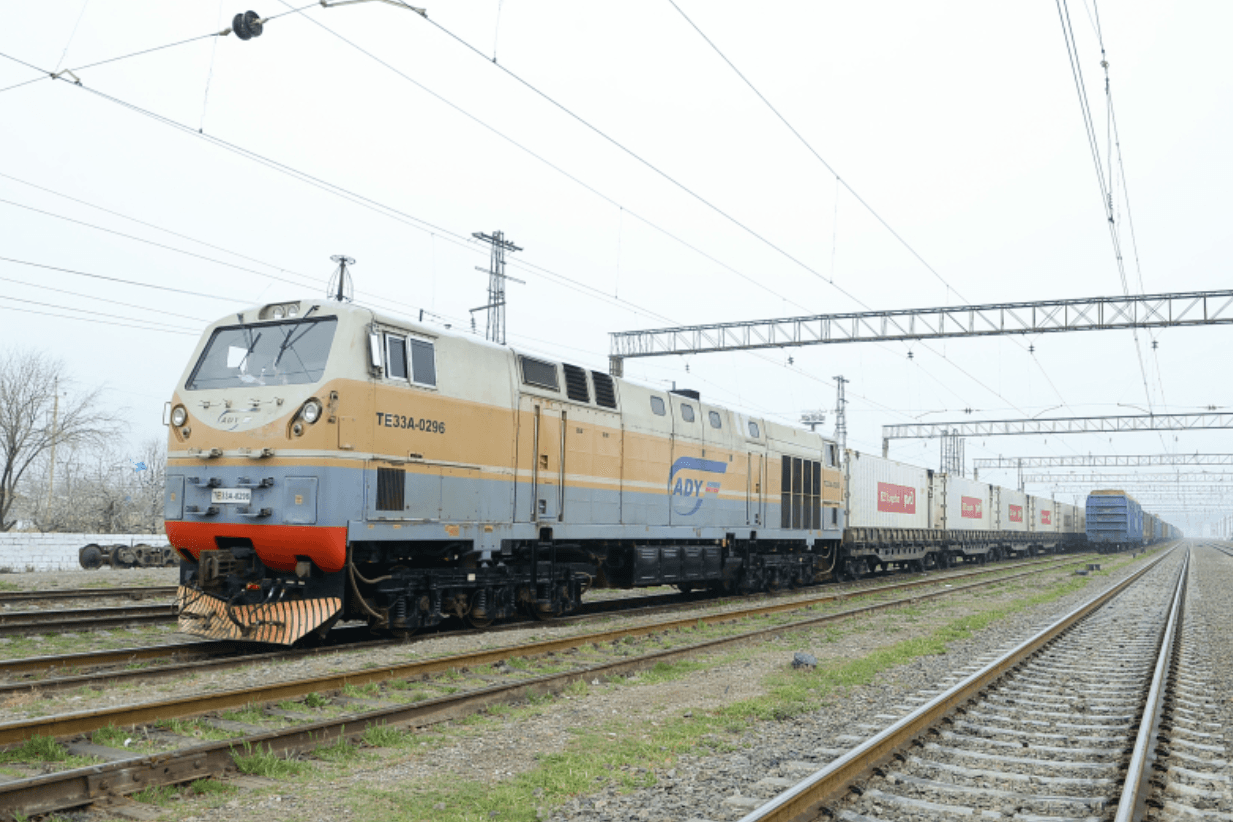
The first regular container trains ran from the Moscow region to Iran’s port of Bandar Abbas. Russia was literally celebrating the route’s success just weeks before the war disrupted it.
That line would dramatically expand the corridor’s capacity. Russia needs that line. Russia needs Iran stable enough to keep the corridor open. That is a powerful incentive for Moscow to keep helping Tehran fight.
The War Within a War
The US and Israel have struck Iran more than 7,800 times in 28 days. They have hit nuclear facilities, missile sites, naval vessels, steel factories, and command centers.
They have not been able to cut the road and rail link through Azerbaijan that connects Iran to Russia.
That is partly a logistics problem. The corridor runs through Azerbaijani territory, and striking it would mean striking a country that has a US strategic partnership. That is not a military option.
It is also partly a political problem. Pressuring Azerbaijan publicly to close the corridor risks pushing Baku further toward Moscow, not away from it.
The US has very limited leverage over Baku’s decision-making when the alternative to the corridor involves economic losses that Azerbaijan cannot afford.
Israel did strike Russian-Iranian weapons routes in the Caspian Sea earlier this month, hitting naval vessels at Bandar Anzali port. Russia condemned those strikes sharply.
The Caspian route was disrupted briefly. The land corridor through Azerbaijan kept going.
Overchuk thanked Azerbaijan. The trucks kept moving. Iran kept receiving what it needed to keep fighting.
This is how wars are actually fought in 2026. Not just with missiles and warships. With trade routes, diplomatic phone calls, and trucks crossing borders in the middle of the night.
About the Author