
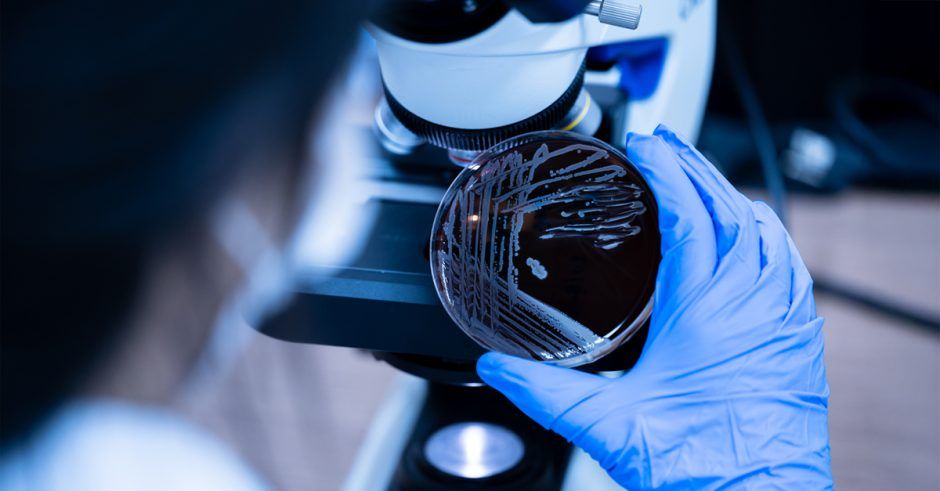
There is a strain of bacteria called Escherichia coli Nissle 1917 that you have almost certainly heard referred to simply as a probiotic.
It lives in the human gut. It is safe. It has been used in digestive health products for over a century. It is, by every conventional measure, entirely unremarkable.
A team of researchers at Shandong University in China just turned it into a cancer-fighting weapon.
Published today in the open-access journal PLOS Biology, the study describes how the team genetically engineered EcN, as the bacteria is commonly known, to produce an FDA-approved anti-cancer drug called Romidepsin directly inside tumors.
Not near tumors. Not in the bloodstream. Inside them.
The results in mice were striking enough that researchers are now calling it a solid foundation for an entirely new approach to cancer treatment.
The Problem With Conventional Cancer Treatment
To understand why this is significant, you need to understand one of oncology’s most persistent frustrations.
Most cancer drugs work systemically. You inject or swallow them, they travel through your entire body, and they try to find and kill cancer cells.
The problem is that your body’s healthy cells get caught in the crossfire. That is why chemotherapy causes nausea, hair loss, fatigue, and organ damage. The drugs are working. They are just working everywhere, not only where you need them.
Precision oncology, the field dedicated to solving this problem, has spent decades searching for ways to deliver cancer drugs specifically to tumors and nowhere else.
The bacteria approach is one of the most elegant solutions proposed so far, because bacteria can do something synthetic drugs cannot: they can navigate biological terrain, find specific environments, and establish themselves there.
Tumors create a particular kind of internal environment. Oxygen-deprived. Acidic. Immunosuppressed. Conditions that most organisms find hostile. Certain bacteria, including EcN, are adapted to thrive in exactly those conditions.
Put those bacteria inside the body, and they naturally gravitate toward tumors. They infiltrate them. They colonize them. And in a normal scenario, they just sit there.
The Shandong team asked: what if they didn’t just sit there?
What the Researchers Actually Did
Using genetic and genomic engineering, the team reprogrammed EcN to produce Romidepsin inside tumors.
Romidepsin is already an approved chemotherapy drug. It works by inhibiting specific enzymes that allow cancer cells to silence tumor-suppressing genes.
It is powerful. It is also, like most chemotherapy drugs, quite toxic when delivered systemically, meaning the side effects of getting enough of it to a tumor by flooding the bloodstream can be severe.
The bacteria solution bypasses that problem entirely.
Rather than flooding the bloodstream with Romidepsin and hoping enough of it reaches the tumor, the engineered bacteria travel to the tumor, set up inside it, and produce the drug locally, right where it is needed.
The researchers tested this by creating a mouse model using breast cancer tumor cells. They introduced the engineered EcN bacteria. The bacteria successfully colonized the tumors and released Romidepsin both in laboratory settings and in living animals.
The drug was produced at the tumor site. It killed cancer cells. Healthy tissue was significantly less exposed.
The authors described the mechanism as a “dual-action” therapy: EcN’s natural tumor colonization working in synergy with Romidepsin’s anti-cancer activity.
Why the Concept Is Even More Powerful Than the Drug Itself
The specific drug used here matters less than what this approach demonstrates is possible.
EcN was engineered to produce Romidepsin in this study. But the same engineering approach could theoretically be used to produce any number of cancer-fighting compounds. The bacteria become a programmable delivery system, not just a carrier for one specific drug.
More than that: the approach represents a new category of therapy entirely. Living treatment, produced on-site, inside the disease itself.
The authors of the study put it this way: “By leveraging engineered EcN, we can design a bacteria-assisted, tumor-targeted therapy for the biosynthesis and targeted delivery of small-molecule anticancer agents.”
That is careful, academic language for: we just showed that bacteria can be turned into programmable drug factories that find cancer and treat it from the inside.
What Still Needs to Happen Before This Reaches People
This is a mouse study. That caveat matters and it cannot be skipped.
Many treatments that work brilliantly in mice fail in humans. The tumor environment in human patients is vastly more complex than in a controlled animal model.
The immune response in humans behaves differently. Dosing, delivery, and safety profiles all need to be established from scratch in human trials.
The researchers themselves were explicit about this: more research is needed before this can be tested in people. Future studies will need to examine possible side effects.
They will need to figure out how to safely remove the bacteria after treatment. They will need to determine optimal dosing regimens.
None of that is small work. It is years of research, minimum.
But this is also genuinely not a theoretical exercise anymore. EcN successfully colonized real breast cancer tumors in living animals and produced an active anti-cancer drug inside them. That has never been demonstrated before with this specific bacteria-drug combination at this level of precision.
The Broader Momentum Behind This Research
This Shandong study is not happening in isolation. It is part of a broader research wave that has been building for years.
In February 2026, a University of Waterloo team published a separate study on engineering bacteria to invade tumors and consume them from the inside, exploiting the oxygen-deprived tumor core as a natural breeding ground for their engineered microbes.
Columbia University researchers have been working on probiotic-based cancer vaccines that train the immune system to recognize and attack tumor-specific proteins.
Scientists at KAIST published work in January 2026 on turning tumor-resident immune cells into cancer fighters from within the tumor itself.
The common thread across all of these approaches is the same: stop trying to fight cancer from the outside by flooding the system with drugs, and start fighting it from the inside using the body’s own biological tools, reprogrammed with precision.
William Coley, the American surgeon who first observed that bacterial infections sometimes caused tumor regression in patients back in the 1890s, would find all of this very satisfying.
He spent decades being dismissed. It took science over a century to understand what he had stumbled onto.
About the Author