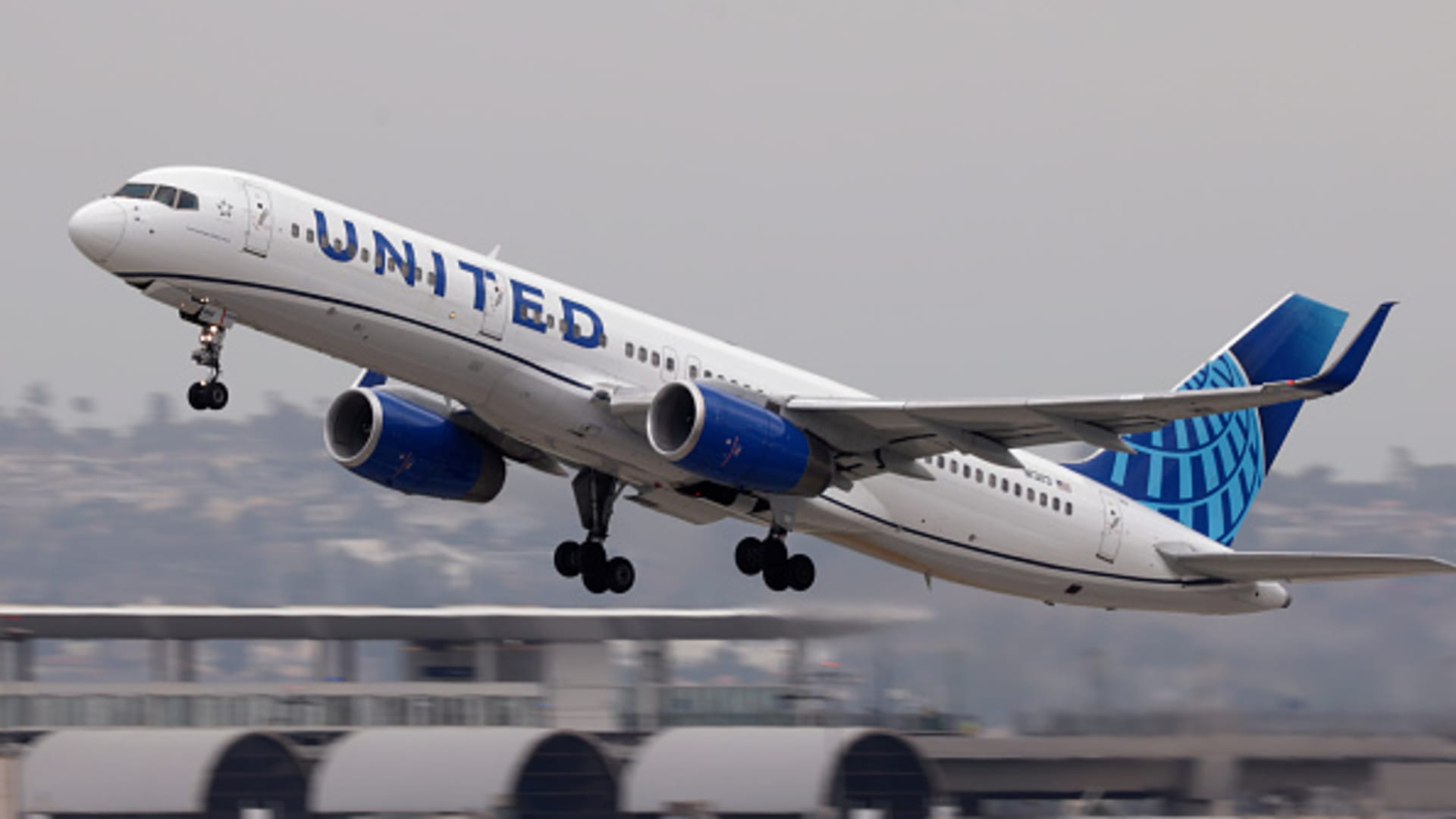
Scott Kirby sent a memo to United Airlines employees on Friday that contained one of the most jarring sentences in recent corporate history.
“The reality is, jet fuel prices have more than doubled in the last three weeks,” he wrote. “If prices stayed at this level, it would mean an extra $11 billion in annual expense just for jet fuel.”
Then came the comparison that really landed: “For perspective, in United’s best year ever, we made less than $5 billion.”
United is cutting 5% of its flights. Redeyes. Mid-week routes. Off-peak trips across Q2 and Q3. It is the first major US carrier to announce a formal capacity reduction, and it will not be the last.
What Jet Fuel Actually Costs Right Now
Before the US-Israel strikes on Iran on February 28, jet fuel averaged around $85 to $90 a barrel.
It is now between $150 and $200 a barrel depending on the market and the day.
To make that concrete: filling the fuel tanks of a Boeing 737-800 cost about $17,000 on February 27. By March 5, the same fill cost more than $27,000. A week later, after Trump briefly suggested the war could end soon and oil dipped, it came back down to around $23,000. Then climbed again.
Jet fuel is the single largest expense for most airlines after labor, typically representing 20 to 30% of total operating costs. Doubling it in three weeks is not a fuel cost challenge. It is an existential threat to the economics of every airline running narrow margins.
And most US airlines have no protection against it.
The Hedging Problem Nobody Wants to Talk About
Fuel hedging is the practice of locking in fuel prices in advance using futures contracts. It is exactly what airlines do to protect themselves from sudden oil price spikes.
Or rather, it is what they used to do.
Southwest Airlines was the last major US carrier with a significant hedging program. It quit last year. A Southwest spokesman confirmed this week there are “no plans” to resume.
Delta, United, American, Southwest — none of them are currently hedged in any meaningful way. They are fully exposed to spot market fuel prices at the exact moment spot market fuel prices have hit levels not seen in four years.
Their European and Asian competitors are better positioned. Many hedge actively. Cathay Pacific, Qantas, SAS, and Air New Zealand have been raising fuel surcharges aggressively, but they have at least some hedging cushion underneath them. US carriers are relying entirely on fare increases and capacity cuts to manage a cost shock they have no financial instruments to absorb.
50,000 Flights Canceled, and the Summer Is Not Safe
The operational damage is separate from the fuel cost damage and nearly as severe.
Aviation analytics firm Cirium reported that nearly 50,000 flights have been canceled since February 28. Bahrain, Iraq, Israel, Kuwait, Qatar, Syria, and the UAE all closed their airspace. Iran’s airspace has been essentially empty of civilian aircraft since the opening strikes. Emirates, Etihad, and Qatar Airways suspended all operations. Billions in losses are already being tallied across the Gulf’s carriers alone.
For airlines flying between Asia, Africa, and Europe, the closure of Middle East airspace has forced rerouting over longer paths that circumnavigate the region entirely. Westbound flights from India are running up to four hours longer than normal. Cathay Pacific’s CEO said fuel costs this month are double the previous two-month average. The airline has doubled its fuel surcharge on all routes from March 18.
For summer travel specifically, the picture is already deteriorating. Travelers are booking summer holidays. Airlines are trying to price tickets for routes where fuel costs are completely unpredictable. United CEO Kirby told investors the company is modeling oil at $175 a barrel in its worst-case planning scenario. If that materializes, the summer travel season will be the most expensive in memory and the most operationally disrupted since COVID.
Spirit Airlines Is the Canary in the Coal Mine
Every airline is hurting. Spirit Airlines may not survive.
Spirit had already filed for its second bankruptcy before the war began. It had just reached a deal with lenders to emerge from it. Then jet fuel doubled in three weeks.
Spirit’s fares spiked 124% in the week ending March 6, according to Deutsche Bank data, the largest increase of any US carrier. That is not because Spirit is successfully raising prices. That is because Spirit is desperately trying to cover costs that its ultra-low-cost model was never designed to absorb at these fuel levels.
“Absent near-term relief, airlines around the world could be forced to ground thousands of aircraft while some of the industry’s financially weakest carriers could halt operations,” Deutsche Bank analyst Michael Linenberg wrote in a research note.
Linenberg was not naming names. He did not have to.
What Travelers Are Actually Experiencing Right Now
The fare increases are already visible and they are hitting unevenly.
Last-minute domestic tickets on most US carriers rose between 0.4% and 13.6% week-over-week in early March, according to Deutsche Bank. That was before United’s 5% capacity cut was announced. Fewer seats on the same routes almost always means higher prices, particularly during spring break season when demand is running at record levels.
Kirby noted something that complicates the picture for carriers: demand is actually still strong. “The 10 biggest booked revenue weeks in our history have been the last 10 weeks,” he told employees. Passengers are still flying. The problem is entirely on the cost side, not the demand side.
That matters because it means airlines can likely pass on some of the fuel surcharge through fare increases without immediately destroying demand. The question is how long that holds if the war drags on through summer, fuel stays elevated, and consumer wallets start to feel the cumulative weight of $112 oil across every category of spending simultaneously.
The Two Problems Compounding Each Other
We have already covered the TSA shutdown separately. But it is worth noting that American aviation is now dealing with two simultaneous crises that compound each other in the worst possible way.
Jet fuel costs have doubled because of the war. Security wait times at major airports have hit two to four hours because TSA officers who haven’t been paid in five weeks are calling out at record rates. Both crises are peaking simultaneously during spring break season, the busiest travel period of the year.
The traveler trying to fly this week is paying more for the ticket, waiting longer at security, and flying on a carrier whose employees received a memo this week explaining that the math of the business they work for has been fundamentally broken by a war that started 22 days ago.
“Put on your seat belt, keep buckled, and then we’ll see how volatile this market will be,” Phil Burke of Argus said.
He was talking about fuel prices. He could have been talking about the whole industry.
About the Author