
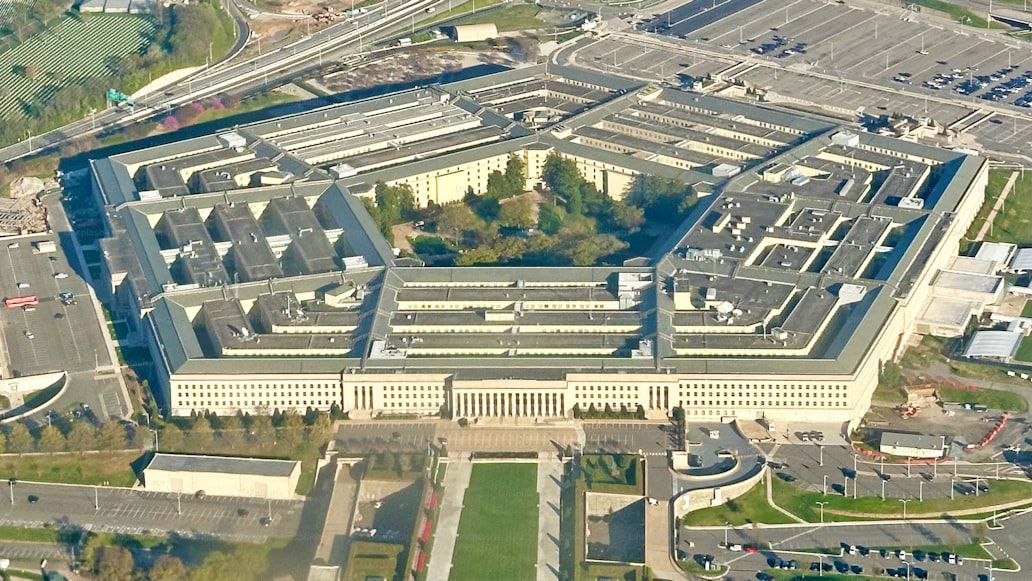
The war in Iran is 18 days old. It has already cost the United States more than $16 billion. And on Wednesday, the Pentagon went to the White House with a number that made even some senior administration officials blink, a supplemental budget request of more than $200 billion to keep the fight going. That’s not a typo. Two hundred billion dollars.
For context, the entire US defense budget before Trump took office was $839 billion a year. The Pentagon is now asking for roughly a quarter of that, on top of existing spending, to fund a war that’s been running for less than three weeks.
The Washington Post first reported the request, citing a senior administration official who confirmed the Defense Department is seeking packages of that size. Reuters independently confirmed it. The White House hasn’t publicly acknowledged it yet.
Where Did $200 Billion Come From?
The short answer: munitions. The US and Israel have struck thousands of targets across Iran over the past 18 days, and the weapons used to do that don’t replenish themselves.
Deputy Defense Secretary Steven Feinberg, who spent the past year obsessing over American munitions production capacity, led the internal effort to put the request together.
His office built out several different funding packages, all aimed at the same core problem: the US has burned through a frightening amount of precision weaponry in a very short time, and the country’s defense industry, which was already struggling to keep pace before the war, needs a serious jolt to catch up.
The numbers behind the request aren’t hard to understand once you see them laid out. The first six days of the war cost $11.3 billion. The first two days alone burned through $5.6 billion in munitions.
Three F-15 fighter jets were destroye, $310 million gone right there. Every $10 increase in the price of oil adds roughly $1.3 billion to the Pentagon’s annual operating costs. And oil is nowhere near where it was before February 28.
Some White House officials privately don’t think the $200 billion request has a realistic shot of getting through Congress, and they said so. Out loud. To reporters.
The math in the Senate is brutal. To pass, the supplemental request needs 60 votes, meaning it needs Democratic support, which isn’t coming. Democrats have been sharply critical of the war from the start.
Senate Democrats are reportedly preparing to force a series of procedural votes that could grind the chamber to a halt in the coming days. Republicans have signaled they support the request in principle, but haven’t mapped out how they actually get there legislatively. Nobody has.
Then there’s the irony problem. Trump spent years hammering Biden over the money sent to Ukraine. He campaigned explicitly on ending American “adventurism” abroad.
Now his Pentagon is asking for $200 billion, more than the US ever spent on Ukraine in a single year, for a war that started 18 days ago. His critics are already lining up that contrast and they’re not being subtle about it.
What This War Could Eventually Cost
The $200 billion request covers the next phase of the conflict, not the whole thing. And defense economists are already warning that the long-term bill could dwarf even that figure.
Linda Bilmes, a Harvard economist who spent years tracking the true cost of the Afghanistan and Iraq wars, told The Intercept that if the war inflates the Pentagon’s base budget by $200 billion, that becomes the new baseline, and over a decade, that’s another trillion dollars added to the defense budget. “Back in 2004, the public debt was below $4 trillion,” she said. “Now it’s $38 trillion, and about 30 percent of that is due to the wars in Afghanistan and Iraq.”
Nobody in the Trump administration is talking about that part yet. They’re focused on getting through the next vote, the next airstrike, the next week.
But the bill for this war is going to follow America around for a long time after the last bomb drops, whenever that turns out to be.
About the Author