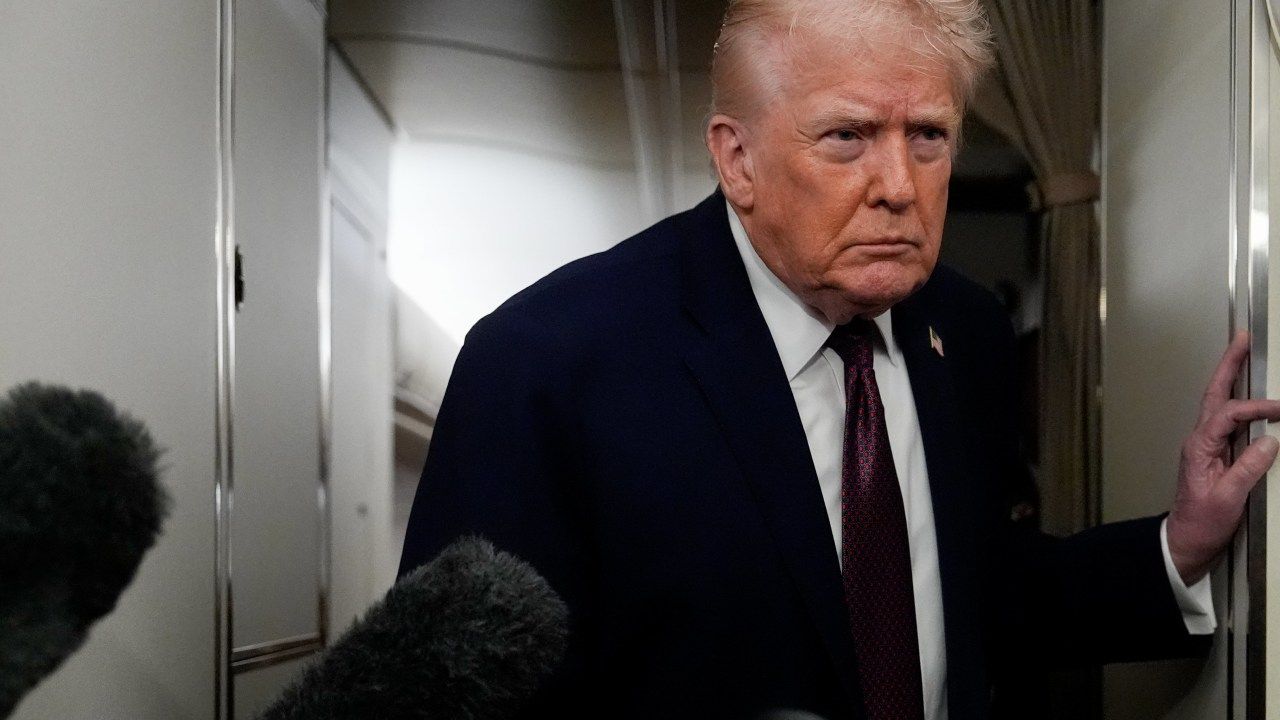
On Monday morning, Donald Trump stood on the tarmac at Palm Beach International Airport and made a stunning claim.
He said the United States and Iran had been holding secret talks over the weekend. He said envoys Steve Witkoff and Jared Kushner had taken part. He said the two sides had reached agreement on 15 key points. He said a deal to end the Iran war was close.
Oil prices fell $16 a barrel within the hour.
Then Iran responded.
“There is no dialogue between Tehran and Washington,” Iran’s Foreign Ministry said flatly.
Iran’s parliament speaker called Trump’s announcement “fake news” designed to manipulate oil markets.
Two sides. Two completely different stories. One war now in its 24th day with no clear end in sight.
What Trump Actually Said
Trump’s claim was specific and detailed, which makes it hard to dismiss as a simple misunderstanding.
He told reporters the talks happened on Sunday and ran into the evening. He named Witkoff and Kushner as the US participants. He said the two sides had agreed on “15 points” and were close to agreeing on “almost all points.”
He also announced that he was delaying his threat to strike Iran’s power plants for five days to give the talks time to develop.
A senior Iranian Foreign Ministry official told CBS News exclusively that Iran did “receive points from the US through mediators” and that those points were “being reviewed.”
That is the closest Iran came to confirming any contact. Points transmitted through mediators. Not direct talks. Not 15 points of agreement. Not a weekend negotiation involving Kushner and Witkoff.
Trump said there was a “communication breakdown” inside Tehran and that the people involved in the talks could not always reach other parts of the regime. Iran’s parliament speaker said Trump was inventing the whole thing.
Both cannot be fully true.
Why This Matters Beyond the He-Said-She-Said
When oil prices fall $16 a barrel in one hour based on a claim that turns out to be contested, that is a serious problem.
Markets priced in the possibility of peace. Then Iran denied the talks. Oil recovered some of the drop, settling around $104 a barrel by Monday evening. But the violent swing exposed just how sensitive global energy markets are to every word coming out of this conflict.
Iran’s parliament speaker specifically accused Trump of using fake diplomatic announcements to manipulate oil prices. That is an accusation of deliberate market manipulation by one of the parties in an active war. It is an extraordinary thing to say out loud.
For ordinary people around the world, the $16 swing matters directly. Airlines price fuel hedges based on oil. Grocery prices track energy costs. Mortgage rates move with inflation expectations that include oil. Every $10 shift in oil prices adds roughly $450 a year to the average American household’s costs, according to Moody’s Analytics.
A war of words about whether talks are happening is not abstract. It costs real money.
What Is Actually Happening on the Ground
While Trump talked about peace deals, the war kept running.
Iran fired missiles at northern Israel on Monday, with fragments falling in the city of Safed. Israel struck targets in Lebanon, including the Qasmiyeh Bridge that the IDF said was being used by Hezbollah. Saudi Arabia ordered Iran’s military attaché and four embassy staff to leave the country immediately.
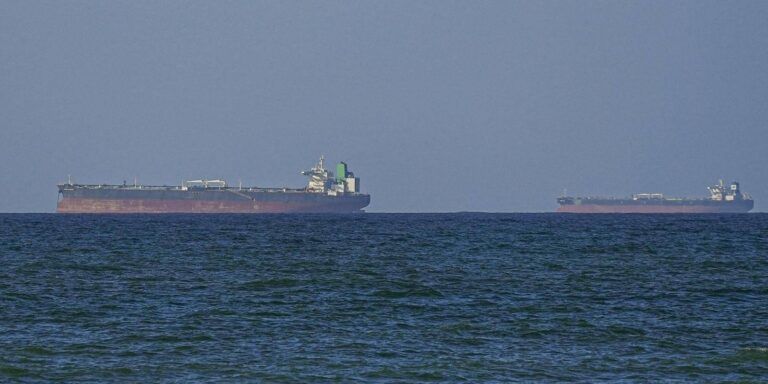
US Central Command admiral Brad Cooper told reporters that the Strait of Hormuz is “physically open” but said ships are staying away because Iran keeps firing missiles and drones at vessels passing through it. Intelligence reports confirmed that Iran has placed naval mines in the Strait, including the Iranian-manufactured Maham 3 and Maham 7 limpet mines. There are at least a dozen of them, possibly more.
A strait that is technically open but full of mines and under constant missile attack is not a strait that ships will use.
Iran’s senior military adviser Mohsen Rezaei said the war will not end until Iran receives “full compensation” for all damage it has suffered. Iran has lost more than 1,400 people, including over 200 children. It has had 81,000 civilian sites damaged. Full compensation is not a negotiating position. It is a condition that no deal in history has ever met.
Who Is Trying to Help
Pakistan stepped forward Monday as a potential mediator.
Pakistani Prime Minister Shehbaz Sharif said his country was ready to host negotiations toward a settlement. Pakistan has relationships with both the US and Iran and has historically played a quiet diplomatic role in South Asian and Middle Eastern disputes.
Turkey’s foreign minister has been more active still. He spoke to more than a dozen regional and global counterparts over the past 48 hours, records show. Turkey has positioned itself as a potential bridge between the two sides throughout the conflict.
Oman had been mediating before the war began and is believed to be one of the channels through which the US communicated its “points” to Iran this weekend. Oman’s foreign minister has confirmed its mediating role without giving details of what has been discussed.
The fact that multiple countries are trying to broker talks is a genuine signal that the war has reached a point where regional actors are frightened enough to get involved. That is not nothing. It is also, so far, not enough.
The Five-Day Clock
Trump’s decision to delay strikes on Iranian energy infrastructure for five days gave the diplomatic track a short runway to produce something real.
Five days from Monday is Saturday, March 28.
If there is no visible progress by then, Trump faces a choice. Extend the delay again and appear weak. Carry out the power plant strikes and trigger Iran’s threatened complete closure of the Strait. Or find a third option that does not currently exist publicly.
The IDF’s chief of staff said this week that Israel estimates it needs “several more weeks” to complete its war goals in Iran. Trump has been saying the war would be over in four weeks since it started. It has been 24 days. The timelines do not match.
Trump is right that something significant happened over the weekend. Messages were exchanged. Points were discussed. That is more than zero.
Whether it is enough to stop a war that has killed thousands of people, disrupted the global energy supply, and pushed the world economy toward recession is a completely separate question.
The five-day clock is running. Iran is still firing. The Strait is still mined.
And somewhere between Trump’s “15 points of agreement” and Iran’s “no dialogue,” the actual truth of this moment is being negotiated in the dark.
About the Author