ebanon has a population of about 5.9 million people.
As of Monday, more than one million of them — roughly one in five — have been forced out of their homes. Some are sleeping on Beirut’s seafront Corniche because they figure the waterfront is less likely to get bombed than anywhere else.
Some are in cars. Some are in schools. About 130,000 are in collective shelters, which sounds more organized than it is.
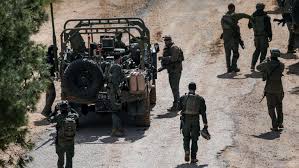
And then, on Monday evening, Israel announced it was sending in ground troops.
The Israeli military called it a “limited and targeted ground operation” — the same language it used in Gaza before things became not-so-limited.
Israeli Defense Minister Israel Katz was more direct: he said the operations would resemble what Israel did in Rafah and Beit Hanoun. He also said that displaced Lebanese will not be returning south of the Litani River until northern Israel is considered safe.
Nobody’s defined what “safe” means or how long that takes.
How Lebanon Got Dragged In
Lebanon didn’t ask for this war. When the US and Israel hit Iran on February 28 — killing Supreme Leader Khamenei — Hezbollah launched rockets into Israel on March 2 in retaliation, honoring its alliance with Tehran.
Israel responded with airstrikes across southern Lebanon and the southern suburbs of Beirut. What had been a fragile, frequently-violated ceasefire since November 2024 collapsed completely.
Since then, at least 886 people have been killed — 111 of them children, 38 of them health workers. The Israeli military has issued evacuation orders covering about 14 percent of Lebanon’s entire territory.
Forty kilometers north of the border. Entire swaths of southern Beirut emptied out. The Norwegian Refugee Council said families were leaving in the middle of the night with nothing but the clothes they had on.
What’s Actually Happening on the Ground
The fighting is concentrated around Al-Khiam, a Hezbollah stronghold in southern Lebanon just north of the Israeli town of Metula.
Hezbollah says it’s ready — its spokesperson put out a statement saying “the resistance awaits the enemy forces with resolve and patience,” which is the kind of thing you say when you’ve booby-trapped the entire town.
Hezbollah has been firing an average of 100 rockets a day into northern Israel throughout all of this. Last week it launched 200 in a single day.
Israel’s military chief said operations would continue for at least three more weeks. At minimum.
The World Is Watching; and Mostly Just Watching
Britain, France, Germany, Italy and Canada put out a joint statement saying a full ground offensive would have “devastating humanitarian consequences” and must be averted.
Germany’s Chancellor Friedrich Merz called the Lebanon offensive an “error.” France’s Macron proposed hosting peace talks in Paris and sent 60 tonnes of humanitarian aid as a gesture.
Meanwhile, analysts say Israel is deliberately creating facts on the ground — occupying territory now so it has something to trade in any eventual negotiation.
Trump’s response to the Lebanon offensive was brief: “Hezbollah is a big problem. They’re rapidly being eliminated.”
The EU foreign ministers met and decided not to expand their naval operations in the region.
So that’s where Western resolve currently stands.
The broader war, Iran, Israel, the US, the Strait of Hormuz, the Gulf states — is now entering its 18th day with over 2,300 people dead across the region and no serious ceasefire talks anywhere on the horizon.
Lebanon is just the latest country to discover it has no good options and very little time to choose between the bad ones.
About the Author