On Thursday morning, a US Air Force F-35A was flying a combat mission over Iran when it was struck by suspected Iranian fire and forced to make an emergency landing at a US air base somewhere in the Middle East.
The pilot is alive. The aircraft landed. US Central Command confirmed both.
The plane was not “shot down” in the way the phrase is usually understood, meaning destroyed or crashed. But it was hit. By Iranian fire. Over Iran. And that matters more than the administration’s framing is letting on.
What CENTCOM Actually Said
The official statement from Navy Captain Tim Hawkins, spokesperson for US Central Command, was carefully worded. “We are aware of reports that a US F-35 aircraft conducted an emergency landing at a regional US airbase after flying a combat mission over Iran. The aircraft landed safely, and the pilot is in stable condition. This incident is under investigation.”
Notice what’s missing. No mention of Iranian fire. No mention of damage. Just “combat mission” and “emergency landing.”
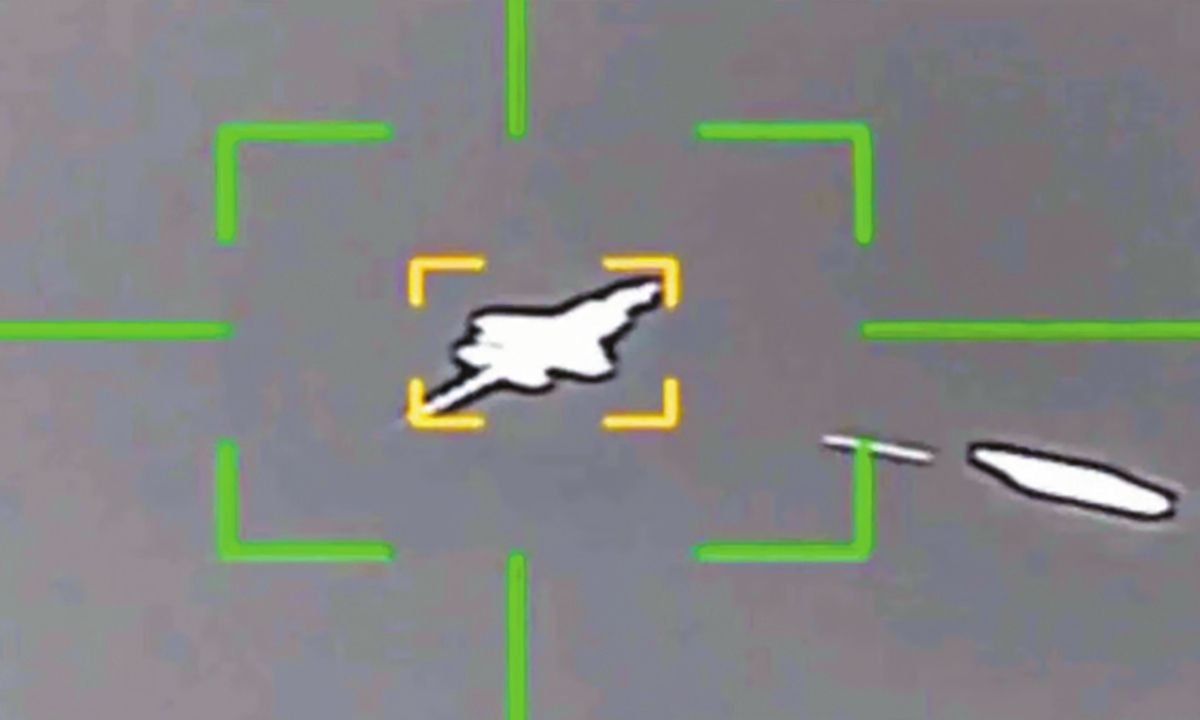
Two sources familiar with the matter told CNN the aircraft was struck by an Iranian munition. The IRGC published a video it says shows the F-35 being targeted and hit by an Iranian air defense system.
The War Zone, one of the most reliable defense publications in the US, reported that the jet was struck by ground fire during a deep penetration strike into Iran. And then, a few hours later, Trump told reporters at a White House meeting: “Nobody is even shooting at us.”
Somebody shot at the F-35. The evidence is fairly clear on that point.
Why This Is a Bigger Deal Than It Looks
The F-35 was designed to be effectively invisible to radar. That is its entire strategic premise. Stealth. The $100 million price tag is mostly paying for that capability.
What Iran appears to have used is not radar. Iran has developed passive infrared air defense systems, sensors that detect heat rather than bounce radar signals off targets.
The F-35’s stealth design dramatically reduces its radar signature. Its heat signature, while reduced, is significantly harder to eliminate.
An infrared system doesn’t need to “see” the aircraft on radar at all. It looks for heat. And jet engines produce a lot of heat.
This is not a new vulnerability. Iran-supplied Houthi rebels in Yemen came close to hitting F-35s with the same type of system.
An Israeli F-35 was reportedly “almost shot down” over Iran in the early days of this conflict. Defense analysts have been warning about this exact scenario for years.
Tyler Rogoway of The War Zone put it plainly on social media: “Iran has road mobile air defenses that can hide and pop up out of nowhere. Moving fighters in for direct attacks doesn’t mean they can operate freely without threat.”
He’s right. And if the F-35 is now considered vulnerable to Iranian infrared-guided systems, the entire deep-penetration strike strategy the US has been running over Iran for three weeks needs to be rethought.
Iran’s Claim vs. America’s Claim
Iran says it “severely damaged” the F-35 and claims the probability of a crash remains high. The US says the aircraft landed safely. Both cannot be fully true at the same time.
Iran has a history of exaggerating claims. During a 12-day conflict with Israel in June 2025, Iranian media circulated images of supposedly downed Israeli F-35s, all of which were later found to be fabricated or taken out of context. So Iranian claims should always be read with appropriate skepticism.
But the US military has its own incentives to minimize. Hegseth said Thursday that Iran’s air defenses have been “flattened.” Trump said nobody is even shooting at US forces.
Neither statement holds up well against an F-35 making an emergency landing with suspected battle damage.
The extent of the damage hasn’t been disclosed. Nobody knows yet whether that aircraft will fly again.
Those are not small questions when the jet costs $100 million and there are a finite number of them in the theater.
The Losses Are Adding Up
This is worth stepping back to look at clearly. In less than three weeks of Operation Epic Fury, the US has lost or damaged a significant number of aircraft.
Three F-15E Strike Eagles were shot down by a Kuwaiti F/A-18 in a friendly fire incident on March 1. All six crew members ejected safely. A KC-135 Stratotanker crashed in western Iraq on March 12, killing all six airmen on board.
Another KC-135 had its tail severely damaged in the same incident. An RQ-180 high-altitude surveillance drone was forced into an emergency landing near Iran the same day the F-35 was hit, fueling speculation it may also have been targeted.
And now the F-35, which Air and Space Forces Magazine reports is one of around 20 US aircraft known to be damaged or destroyed so far in the conflict.
Twenty aircraft in nineteen days. None of that appears in the “winning decisively” briefings.
The Actual Question Nobody Is Asking
If Iran has successfully hit an F-35 using infrared-guided air defenses, and if those systems are mobile and concealable, then the US cannot simply destroy Iranian air defense installations and call the skies safe.
The road-mobile systems can be hidden in a warehouse, driven out to a new location, set up, fired, and relocated before a counterstrike can be organized.
That is not a problem you solve with more airstrikes. It is a problem that either requires ground forces to hunt and destroy the systems individually, or requires accepting that F-35s operating over Iran are not invulnerable.
The administration built its entire case for this air campaign on the premise that American technology was so far advanced that losses would be minimal and controllable. The F-35 was the crown jewel of that argument. It just got hit over Iran.
The pilot is safe. The investigation is ongoing. And somewhere in the Pentagon, someone is having a very uncomfortable conversation about what comes next.
About the Author