Twenty days into Operation Epic Fury, Donald Trump is facing a problem that no amount of Truth Social posts can solve.
The United States launched a war without consulting its allies. Now those allies are being asked to help clean up the mess, and one by one, publicly and without much apology, they’re saying no.
Not quietly. Not diplomatically. Out loud, on camera, with receipts.
Europe Says No. And No. And No Again.
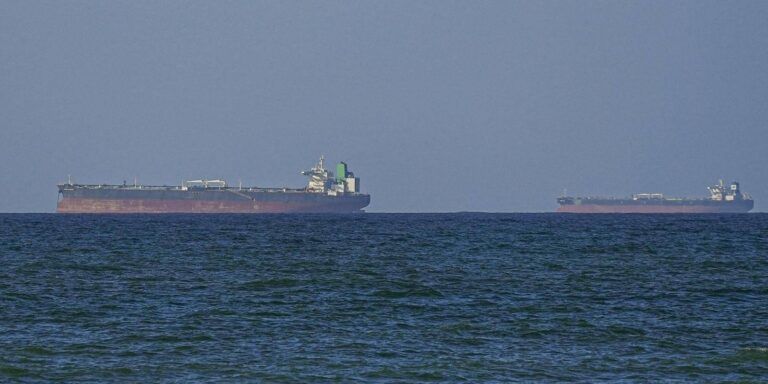
Trump spent last week demanding that European allies send warships to the Strait of Hormuz to help force it back open.
He threatened NATO’s future. He called out Britain, Germany, Japan, South Korea by name. He said allies who refused faced a “very bad future” for the alliance.
They said no anyway.
Germany’s Defence Minister Boris Pistorius didn’t bother softening it: “This is not our war. We have not started it.” Then he twisted the knife: “What does Donald Trump expect from a handful of European frigates in the Strait of Hormuz that the powerful US Navy cannot do?”
France’s Macron was equally direct: “We are not a party to the conflict, and France will never take part in operations to open or liberate the Strait of Hormuz in the current context.” The UK’s Keir Starmer said Britain “will not be drawn into the wider war.”
The EU’s foreign policy chief Kaja Kallas gathered 27 European foreign ministers in Brussels on Monday to discuss the Strait. After the meeting, her summary was four words: “Nobody wants to go actively.”
Italy, Japan and Australia all separately confirmed they wouldn’t send ships either. An anonymous EU diplomat may have captured the mood best: “We were not involved in the take-off, so we won’t be involved in the landing.”
That line is going to sting for a while.
Qatar, America’s Host, Just Called for the End of the War
If Europe’s refusal stings, Qatar’s situation is something else entirely. The US military’s largest base in the Middle East, Al Udeid Air Base, sits on Qatari soil.
Qatar hosts roughly 10,000 American troops. The country has been struck by Iranian missiles, had its Ras Laffan gas facility set on fire, shot down two Iranian bombers, and arrested ten IRGC operatives operating spy cells on its territory.
And yet Qatar’s Prime Minister, the foreign minister of the country literally hosting the war — called for an immediate diplomatic solution to end the conflict.
Qatar’s Energy Minister Saad al-Kaabi warned that if the war continues, Gulf energy producers may be forced to declare force majeure entirely, and said bluntly: “This will bring down economies of the world.”
Qatar expelled Iranian military and security attaches on March 19, giving them 24 hours to leave. But it also expelled any fantasy that Gulf allies are fully on board with where this war is heading.
They’re absorbing the missiles. They’re not signing up for whatever comes next.
Then Mexico, Brazil and Colombia Piled On
These are countries Trump has tariffed, threatened, insulted and publicly bashed for years. Claudia Sheinbaum’s Mexico. Lula da Silva’s Brazil. Gustavo Petro’s Colombia. Not exactly Trump’s natural allies.
On March 13, the three issued a joint statement calling for an immediate ceasefire and offering to contribute to mediation.
They said differences between states should be resolved through international diplomacy, not bombs. They said they were willing to help broker peace.
Washington didn’t respond. The statement was largely ignored by US media. But the symbolism isn’t nothing, three of the largest economies in Latin America, all of whom Trump has treated with varying degrees of contempt, standing up together and telling him he’s wrong. Publicly. In a joint statement. While the war is still running.
The Isolation Is Starting to Add Up
Step back and look at the full picture. Oman’s foreign minister had announced a diplomatic breakthrough the day before the strikes began.
Iran had agreed to significant nuclear concessions, and talks were set to resume on March 2. Trump bombed anyway.
The mediators were blindsided. Oman’s foreign minister said he was “dismayed” and that “active and serious negotiations had been undermined.”
The International Crisis Group, which doesn’t typically use words like “reckless”, called the operation “sweeping, reckless and almost certainly lawless.” The Pope called for a ceasefire.
UN Secretary-General António Guterres has been calling for one since day one. Iran’s foreign minister says flatly the US “must be held accountable.” And Republican Senator John Kennedy told Fox News he’d faint if Trump sent in ground troops.
China isn’t sending warships. India isn’t sending warships. South Korea said no. Japan said no. Australia said no. France said no. Germany said no. Britain is being deliberately vague, which in diplomatic language is also a kind of no.
That’s not a coalition. That’s one country and one ally, the US and Israel, fighting a war that has set fire to Qatar’s gas facilities, blocked a fifth of the world’s oil supply, pushed food prices toward a crisis, killed more than 2,300 people across the region, and produced precisely zero progress toward whatever the strategic objective is supposed to be.
Trump said it would be over in four weeks. It’s been 20 days. Nobody believes four weeks anymore.
What Happens When Nobody Shows Up
Julien Barnes-Dacey of the European Council on Foreign Relations put the strategic problem clearly: Western ammunition stocks and missile interceptors are being depleted in the Middle East, the surge in energy prices has thrown a lifeline to Russia’s economy, and Trump, distracted by the Strait, has issued sanctions waivers on Russian oil. Ukraine is watching.
“The argument that aligning with Trump is a pathway towards securing European interests in Ukraine,” Barnes-Dacey said, “is increasingly weakened.”
That’s the domino effect nobody in Washington seems to be tracking. Every day this war continues without clear goals, without allied support, and without a path to ending it, costs the United States something that can’t be bought back easily: the assumption that American power is organized, purposeful and worth aligning with.
Germany said “nein.” France said “non.” Britain is studying the carpet. Qatar is calling for peace from a country that houses American troops. Mexico, Brazil and Colombia, countries Trump spent years picking fights with, are offering to mediate.
That’s the map of this war’s diplomatic standing right now. Twenty days in. With no exit strategy visible from the outside, and no coalition forming on the horizon.
About the Author