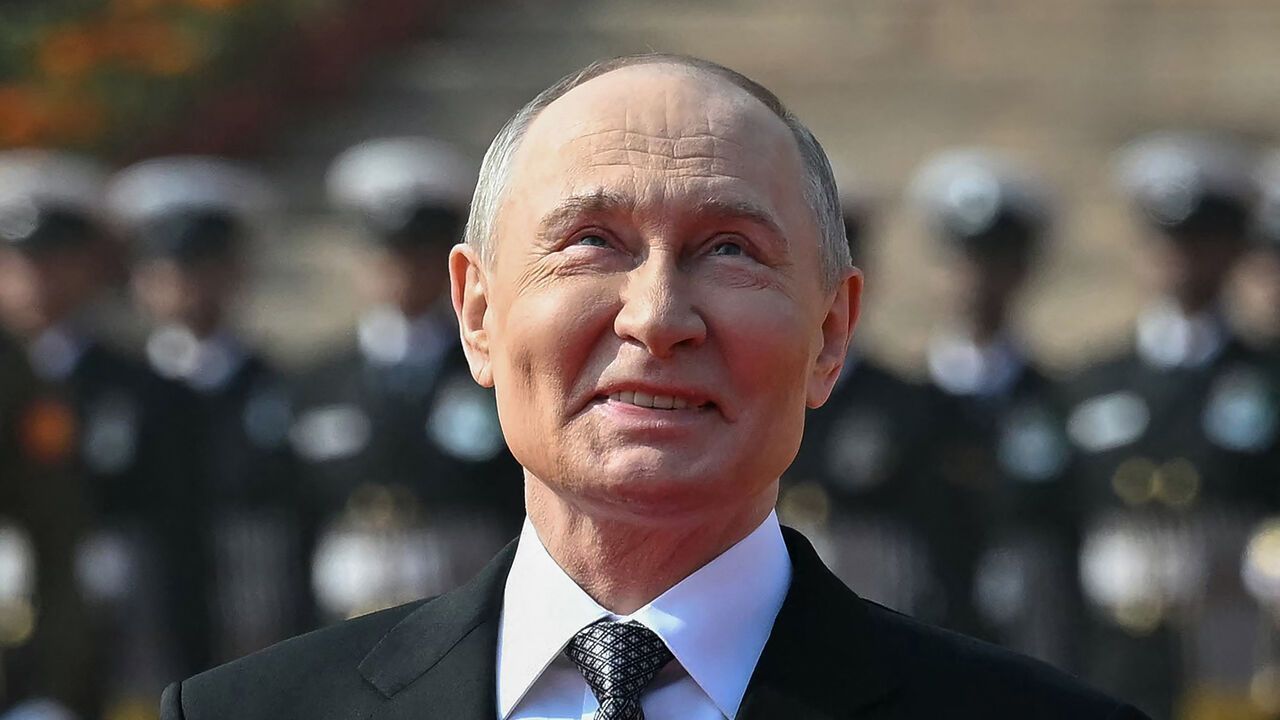
In the two weeks since the US and Israel launched Operation Epic Fury on February 28, Vladimir Putin has watched his biggest geopolitical problems solve themselves, one by one, without firing a single shot.
Oil prices surged, filling Russian state coffers. US attention pivoted entirely away from Ukraine.
The sanctions regime that Western countries spent four years building started cracking.
And then, on March 12, the Trump administration did something that would have been unthinkable a month ago: it quietly issued a 30-day waiver lifting restrictions on Russian oil sales.
Europe’s reaction was fury. Trump’s explanation was practicality. Russia’s response was something close to satisfaction.
What the Numbers Actually Show
Russia earned €7.7 billion in fossil fuel revenue in the two weeks after the Iran strikes, driven entirely by skyrocketing global oil prices.
Before the war, Russian crude was trading at a 10 to 20% discount to Brent, the international benchmark, because of Western sanctions.
That discount has now “completely vanished,” according to Luke Wickenden, a Russia sanctions analyst at the Centre for Research on Energy and Clean Air.
Russian crude is now trading at essentially the same level as Brent. The sanctions that took years to build and enforce just got neutralized, not by Russia breaking through them, but by a war in a completely different country blowing up the market conditions that made them work.
Ukraine’s President Zelensky said Sunday that Russia faced a deficit of more than $100 billion in 2026 alone, before the Iran war began.
“Due to all the sanctions imposed by the United States and the EU, and because of our deep strikes on Russian energy infrastructure,” he said, Russia was bleeding.
That deficit is now being plugged, fast, by the Iran windfall. The Kremlin’s economic envoy Kirill Dmitriev, who met with Trump’s special envoy Steve Witkoff and Jared Kushner in Florida this week, wrote that the US had “effectively acknowledged the obvious: without Russian oil, the global energy market cannot remain stable.” That’s not spin. That’s accurate.
The Sanctions Waiver That Broke the Alliance
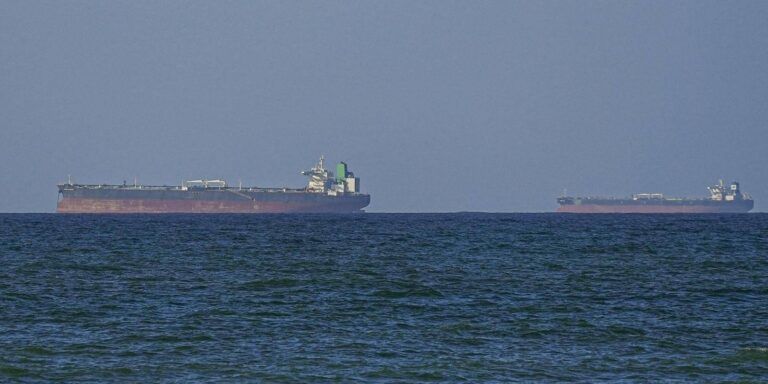
The 30-day waiver, announced by Treasury Secretary Scott Bessent on March 12, applies to Russian crude and petroleum products already loaded on ships as of that date, roughly 100 to 124 million barrels across 30 locations globally.
Bessent called it “narrowly tailored” and insisted it would not “provide significant financial benefit to the Russian government.” Analysts disagree. Europe’s leaders were more direct.
During a G7 virtual call the day before the waiver was announced, German Chancellor Friedrich Merz, British PM Keir Starmer, and French President Macron explicitly urged Trump not to ease sanctions. He did it anyway.
Merz called the decision “wrong” the next morning. Norway said sanctions should not be relaxed.
The UK ruled out following Washington’s lead. Even Bessent acknowledged the move was “unfortunate”, a rare moment of candor from a Treasury Secretary announcing his own policy.
The sanctions regime against Russia was built on coalition discipline. Every country had to hold the line for the pressure to work, because if one major buyer could access Russian oil at discount prices, others would too, and the whole framework would erode.
Trump just gave every country in the world official US permission to buy Russian oil for 30 days. Eddie Fishman, who ran Russia sanctions policy at the State Department under Obama, called it “the first major relaxation of sanctions on Russia we’ve seen” and warned it “risks dismantling the regime that we built starting in 2014.”
Thailand announced it would start talking to Moscow immediately. Japan said it would consider Russian purchases. The discount that punished Russia is gone. The stigma that reinforced the discount is weakening.
What Putin Gets Beyond the Money
The financial windfall is real but it’s not even the most important thing Putin is getting out of this. Consider what’s happened to American attention since February 28.
Ukraine is off the front pages. THAAD components were redeployed from South Korea to the Middle East, thinning US air defense capabilities in the Pacific and on the Korean Peninsula.
Every conversation in Washington that was about Ukraine funding, NATO reinforcement, or Russian accountability is now about Iran, the Strait, and oil prices.
The war in Iran didn’t just help Russia financially. It gave Russia breathing room it couldn’t have bought at any price.
Senator Jeanne Shaheen, ranking member of the Senate Foreign Relations Committee, put the contradiction plainly on social media: “As Putin helps Iran target Americans in the Middle East, @POTUS is now filling the Kremlin’s war coffers.”
She’s referring to US intelligence assessments, confirmed this week, that Russia has been sharing intelligence and targeting data with Iran throughout the conflict, the same Iran that has killed 13 American service members and wounded 200 more.
Julien Barnes-Dacey of the European Council on Foreign Relations flagged another dimension that Washington doesn’t seem to be tracking: Western ammunition stocks and missile interceptors are being depleted in the Middle East.
Every Patriot missile fired to defend a Gulf ally is a Patriot missile not available for Eastern Europe. Every hour of American military planning devoted to Hormuz escort options is an hour not devoted to NATO’s eastern flank.
The war in Iran isn’t just a Middle East problem. It’s restructuring the entire map of Western military exposure.
The Question Nobody Is Asking
There’s a 30-day clock running on the Russian oil waiver. It expires April 11.
If oil prices haven’t come down significantly by then, and there’s no reason to believe they will, given the Strait is still largely closed and Qatar’s gas facility is still damaged, the White House will face a choice: let the waiver expire and watch prices spike further, or extend it and further entrench Russia’s return to the global oil market.
Moscow’s position is already that the waiver represents an “increasingly inevitable” acknowledgment that global markets need Russian oil.
The Kremlin is framing a tactical US concession as a structural victory. And the longer the Iran war runs, the harder it gets to argue they’re wrong.
Trump launched Operation Epic Fury to neutralize Iran and reshape the Middle East.
He may have done that. But in the process, he handed Putin something sanctions couldn’t be stripped away: a war that made Russia indispensable again.
That’s not a side effect. That’s a strategic outcome. And nobody in the administration seems to have planned for it.
About the Author