Twenty days into Operation Epic Fury, the official line from Washington is optimistic.
Over 7,800 targets struck. Fifty Iranian naval vessels on the sea floor. Khamenei dead. Iran’s ballistic missile stockpile degraded.
Defense Secretary Pete Hegseth called it “straightforward.” President Trump said it would be over in four weeks.
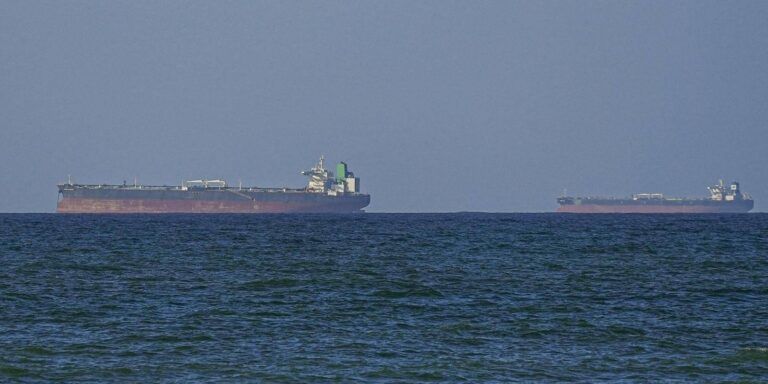
That was eighteen days ago. The Strait of Hormuz is still largely closed. Oil is above $114. Qatar’s largest gas facility has been set on fire.
Thirteen American service members are dead. More than 200 have been wounded. An F-35, supposedly invulnerable to Iranian air defenses, made an emergency landing with battle damage. And the world’s major powers, one by one, have refused to help.
The military campaign against Iran has produced real results. Nobody serious is disputing that. But military results and strategic victory are two entirely different things.
The US has won battles before without winning wars. Vietnam. Iraq. Afghanistan. The pattern is familiar enough that it deserves to be named before it repeats.
Here are eight reasons, grounded in fact and supported by the analysis of the most credible military and strategic institutions in the world, why the United States is going to find this war extraordinarily difficult to win.
1. Iran Was Built to Survive Exactly This
The single most important thing to understand about Iran’s military and political structure is that it was designed, from the ground up, to survive decapitation strikes.
The Islamic Republic learned from watching what happened to other regimes the US targeted. It dispersed its leadership. It built succession protocols into the constitution itself.
It embedded power across multiple institutions, the IRGC, the judiciary, the clerical establishment, so that no single strike, however devastating, could collapse the system.
The February 28 strikes killed Khamenei, his family, and dozens of senior officials in what Israeli sources called one of the largest regime decapitation operations in modern warfare.
Within 24 hours, a three-person interim council was named. Within ten days, Mojtaba Khamenei was elected the new Supreme Leader, with the IRGC, the judiciary, and all senior political figures pledging allegiance. Trump called him a “lightweight.” He immediately pledged to continue fighting.
History is clear about this. As the Chicago Council on Global Affairs noted in its assessment, “If the Iranian regime survives the current action, it will continue to be led by the same kinds of people who have pursued the policies the United States says it is fighting to change.”
Regime change requires either the regime to collapse from within or an occupying force to impose a new one. Neither is happening. The regime did not collapse. Ground troops are politically impossible. The system continues.
2. Nobody Has Defined What Winning Actually Looks Like
This is arguably the most dangerous problem of all, and the one least discussed in coverage of the daily military operations.
The Washington Institute for Near East Policy published a detailed analysis noting that the US has settled on four military objectives: destroying Iran’s navy, destroying its missile capabilities, preventing nuclear development, and cutting off proxy support.
These are achievable, at least partially. But Trump has also openly discussed regime change. Hegseth implied total Iranian military surrender. Trump told Iran’s people to “take over” their government. These are not the same objectives, and they point toward very different endpoints.
The Chicago Council put it plainly: “With so many objectives on the table, there is less confidence in a clean outcome.” When a military campaign has no clearly defined endpoint, it cannot have a clearly defined victory condition.
And without a victory condition, the question of when to stop becomes impossible to answer. You cannot win a war you have not defined.
Twenty days in, nobody in the administration has given a consistent answer to the question: what does success look like, exactly, and how will we know when we’ve achieved it?
3. Iran’s Geography Makes Ground Operations a Nightmare
Iran is not Iraq. It is not Afghanistan. It is not any of the theaters the US has operated in over the past three decades.
Iran is 1.648 million square kilometers, roughly four times the size of Iraq and more than twice the size of Afghanistan.
It has a population of 90 million people. Its terrain includes the Zagros mountain range in the west, the Alborz range in the north, and the vast central plateau, all of which create natural defensive terrain that makes ground movement slow, expensive, and predictable.
The RAND Corporation’s experts noted in their war assessment that Iran’s proxy network, even in its current degraded state, “could still have covert cells around the globe waiting for the signal to launch terrorist attacks or conduct sabotage.” That’s the external dimension.
Inside Iran itself, any ground force would be operating in hostile urban and mountain environments against a population that, whatever its grievances with the clerical establishment, has historically unified against foreign invasion.
This is the same population that fought Iraq to a standstill in an eight-year war that killed hundreds of thousands.
The Trump administration understands this, which is why ground troops remain officially off the table. But here is the problem: if you can’t go in on the ground, and the regime won’t collapse from the air, and regime change is still nominally the goal, you are stuck.
The air campaign can degrade. It cannot transform. And degrading without transforming is how wars drag on for years.
4. The Mobile Air Defense Problem the F-35 Just Made Impossible to Ignore
For three weeks, the US has been operating under the working assumption that Iran’s air defenses had been sufficiently degraded to allow near-free operations over Iranian territory.
Hegseth said Iran’s air defenses had been “flattened.” Trump said nobody was shooting at US forces.
Then an F-35 made an emergency landing with suspected battle damage from Iranian fire.
The $100 million aircraft, designed specifically to evade radar-based air defense systems, appears to have been hit by an infrared-guided system, one that detects heat signatures rather than radar reflections. The F-35’s stealth dramatically reduces its radar cross-section. It does not eliminate its heat signature.
The Foundation for the Defense of Democracies noted in its March 19 operational assessment that “Iranian and proxy drone attacks remain a significant threat to US forces” and that Russia has been providing Iran with improved drone technology and satellite intelligence on US positions.
Road-mobile air defense systems can be hidden in warehouses, relocated between missions, and set up faster than a counterstrike can be organized. You cannot bomb your way to air supremacy against a system that isn’t in the same place twice.
This is not an obscure vulnerability. Defense analysts have been warning about exactly this scenario for years. It just stopped being theoretical on Thursday.
5. Iran Is Fighting a Different War, and It’s Working
The Center for Strategic and International Studies published one of the most important analytical pieces of this conflict, and its central argument deserves to be stated directly: “Iran may be losing the military contest with the United States, but it is fighting a different war, one aimed at the global economy.”
Think about what Iran has actually achieved in 20 days. It has closed, or severely restricted, the Strait of Hormuz, sending oil above $114 a barrel. It has hit Qatar’s largest gas facility, disrupting 20% of global LNG supply.
It has struck Kuwait’s refineries, Abu Dhabi’s facilities, and UAE civilian and financial infrastructure. It has launched over 500 ballistic and naval missiles and nearly 2,000 drones across the region.
It has mobilized 60 hacktivist groups against American corporate and infrastructure targets. It has killed 13 US service members and wounded 200 more. It has forced a $200 billion supplemental budget request that is stalled in Congress.
None of this is military victory in the conventional sense. All of it is achieving Iran’s strategic goal: make the war so economically costly for the US and its allies that political will collapses before Iranian military capacity does. Goldman Sachs has raised US recession odds to one in four.
Oxford Economics warns that $140 oil for two months tips the eurozone, the UK, and Japan into recession. Qatar’s energy minister warned the world to “prepare for economies to break.” Iran doesn’t need to win on the battlefield. It needs to outlast the political will of the country attacking it.
Time, as the Chicago Council put it bluntly, “favors Iran in this conflict.”
6. The Proxy Network Was Degraded, Not Destroyed, and It’s Still Active
One of the foundational assumptions of Operation Epic Fury was that years of Israeli and US pressure had degraded Iran’s proxy network to the point where it could not mount a serious response. That assumption has been partially correct and largely insufficient.
Hezbollah remains operational. The Atlantic Council’s assessment found it “retains significant military capabilities” despite persistent Israeli pressure. Hezbollah has been firing an average of 100 rockets a day into northern Israel since the war began, with single-day spikes to 200.
Israel’s ground operation in Lebanon, now in its second week, has not stopped the rockets.
Iraqi militias launched 67 drone and missile attacks on US positions in the first three days of the war alone. Iran-backed groups in Iraq retain influence and, as the FDD noted, are increasingly capable of deploying first-person-view drones against specific high-value targets including the US Embassy in Baghdad.
The Houthis remain in Yemen, operational and waiting. RAND’s experts noted that Iran may be “adapting its forward defense strategy to fit the current war,” moving from conventional proxy warfare to a global covert threat posture including sleeper cells.
Degraded is not the same as neutralized. Iran built this network over 40 years. It does not disappear in 20 days of airstrikes.
7. The US Is Completely Isolated, and the Isolation Is Growing
No major ally has sent warships to the Strait of Hormuz. Germany said no. France said no. Britain has been deliberately vague, which is diplomatic language for no. Japan said no. Australia said no. South Korea said no. Italy said no.
The EU held a meeting of all 27 foreign ministers and the summary was four words: nobody wants to go.
Qatar, which hosts 10,000 American troops and the US military’s largest regional base, called for an immediate diplomatic solution. Mexico, Brazil, and Colombia, countries Trump has tariffed and insulted for years, issued a joint ceasefire call.
The Pope called for peace. The UN Secretary-General has been calling for a ceasefire since day one.
The Washington Institute noted that one of the US’s critical failures was “inadequate planning for contingencies such as the need to evacuate American citizens or provide forewarning of conflict.”
The allies who were not consulted before the strikes began have no obligation to share the costs of a war they were not asked to join. And every day the war continues without coalition support, the diplomatic isolation becomes more entrenched.
Historic American military victories, from World War Two to the Gulf War, were built on coalition frameworks. This war has one ally. That has never been a formula for decisive strategic success at this scale.
8. Russia Is Actively Helping Iran Win, and Nobody Has a Plan for That
This is the dimension of the war that most coverage has consistently under-weighted, and it may be the most consequential of all.
Russia is providing Iran with satellite intelligence on US military positions. It is supplying improved drone technology. It has publicly congratulated Mojtaba Khamenei and pledged continued support.
As the FDD’s analysis noted, Russian intelligence sharing “would not only increase Tehran’s capability to target US forces with drones and ballistic missiles but also could improve Iran’s ability to successfully strike those targets.”
Meanwhile, the Trump administration issued a 30-day waiver lifting restrictions on Russian oil sales, effectively neutralizing the sanctions regime that took four years to build.
Russia earned 7.7 billion euros in the two weeks after the Iran strikes began, funded by oil prices inflated by the war itself.
Putin is watching the US drain its munitions stockpiles, deplete its missile interceptor reserves, and consume its political capital in the Middle East, while Russia’s economic deficit, which was previously being squeezed by Western sanctions, quietly refills.
The Atlantic Council’s Julien Barnes-Dacey captured the strategic disaster clearly: Western ammunition stocks are being depleted in the Middle East.
THAAD components have been redeployed from South Korea. Every hour of Pentagon planning devoted to Hormuz is an hour not devoted to NATO’s eastern flank. The war in Iran is not just a Middle East conflict. It is restructuring the entire map of Western military exposure, to Russia’s direct benefit.
There is currently no publicly announced US strategy for handling Russian material support to Iran. There is no plan being discussed. There is no diplomatic track.
Russia is helping Iran fight a war against America, and the US is simultaneously issuing sanctions relief to Russia. That is not a recipe for strategic victory. It is a recipe for strategic exhaustion.
The Bottom Line
None of this means the US cannot degrade Iran’s military substantially. It already has.
Iran’s navy is decimated. Its ballistic missile stockpile has been hit hard. Fifty naval vessels are on the sea floor. Khamenei is dead. These are real, significant military achievements.
But military achievement and strategic victory are not the same thing.
The US has produced military achievement in Vietnam, Iraq, and Afghanistan too.
What it has struggled to produce, consistently, is a durable political outcome that justifies the cost and matches the original stated objectives.
Iran’s regime is intact. Its economy is hurting but being partially rescued by war-inflated oil prices.
Its proxy network is damaged but operational. Its air defenses are degraded but not eliminated. Its cyber capabilities are active and escalating.
Its patron Russia is richer and more emboldened than it was three weeks ago. The world has refused to help. The domestic political runway is shortening every day oil stays above $100.
And nobody has answered the basic question: what does winning look like, and how do we get there from here?
That question was never properly answered before the bombs dropped on February 28. Twenty days later, it still hasn’t been.
That is not a plan for victory. It is a description of how difficult wars become when they are started without one.
About the Author