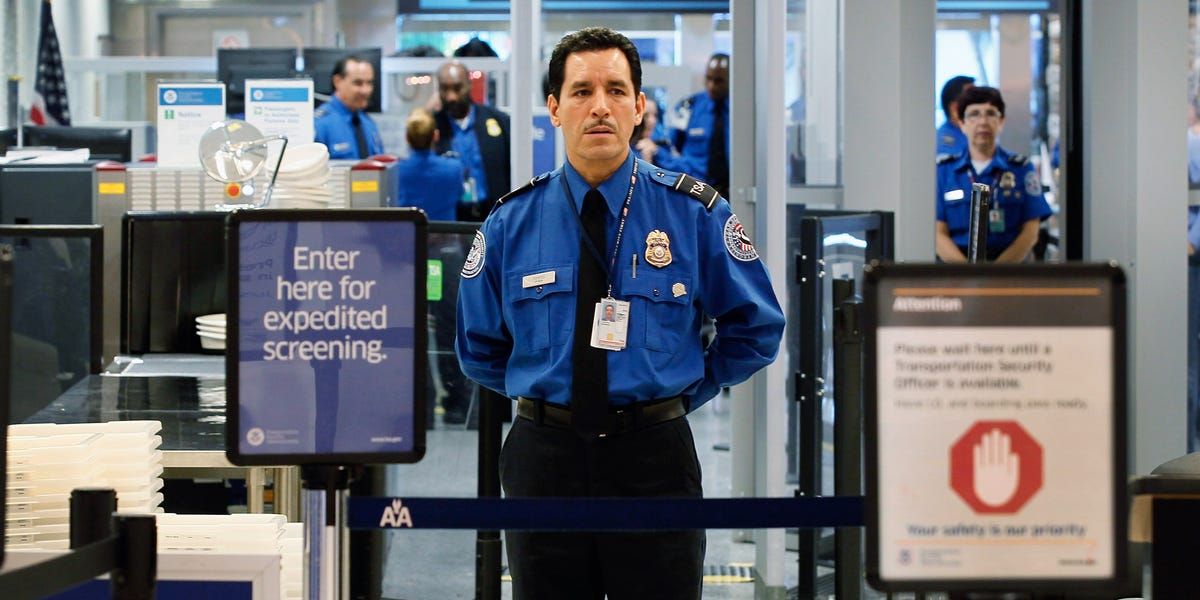
On March 14, at Houston’s Hobby Airport, 55% of TSA officers didn’t show up for work.
More than half the security workforce. Gone. Not sick, just done showing up to a job that stopped paying them five weeks ago.
Lines stretched for hours. Passengers missed flights. Some people heading to spring break destinations just turned around and went home.
This is what a partial government shutdown looks like from the inside of an airport. And it’s been going on since February 14.
How It Got Here
Congress passed a $1.2 trillion spending package in early February that kept most of the federal government funded through September.
But there was a carve-out: the Department of Homeland Security would be funded separately, in a separate vote.
That vote collapsed. Democrats refused to back DHS funding unless Republicans agreed to reforms on immigration enforcement, specifically, requirements for ICE agents to identify themselves and prohibitions on racial profiling, demands that followed the fatal shootings of two US citizens, Alex Pretti and Renee Good, in Minneapolis during a federal immigration operation. Republicans called the demands a non-starter and refused.
So DHS ran out of money on February 14. And the nearly 50,000 TSA officers who screen passengers, baggage and cargo at US airports, workers legally classified as “essential,” meaning they must report to work regardless, started showing up without getting paid. It’s the third time in less than a year they’ve been through this. The third time.
What’s Happening at Airports Right Now
The numbers tell the story faster than any description. TSA callout rates, the share of officers who don’t show, normally run below 2%.
At Atlanta, JFK, and Houston, they’ve been running around 20% since mid-February. On the worst days they’ve hit 30% in New Orleans and Atlanta, and that 55% peak in Houston. Three hundred and sixty-six TSA officers have quit outright during the shutdown.
Each one that leaves takes 4 to 6 months to replace and certify, meaning even after the shutdown ends, the staffing hole doesn’t close quickly.
Wait times of two, three, even four hours have been reported at multiple airports.
TSA’s Acting Deputy Administrator Adam Stahl went on Fox News this week and said something that rarely gets said out loud by federal officials: “It’s not hyperbole to suggest that we may have to, quite literally, shut down airports, particularly smaller ones, if call-out rates go up.” That’s the agency responsible for airport security warning that airports might close.
In spring break season. With 171 million passengers expected this season alone.
There have been public appeals, at some airports, signs asking travelers to donate food or gift cards to TSA workers.
Not water bottles at a marathon. Gift cards. To federal employees. Working security at American airports. In 2026.
The Airlines Finally Snapped
On Sunday, the CEOs of American, Delta, United, Southwest, JetBlue, Alaska, UPS, FedEx and Atlas Air published a joint open letter in The Washington Post addressed directly to Congress.
The language wasn’t corporate-diplomatic. It was blunt. “Once again, air travel is the political football amid another government shutdown.”
They called TSA officers working without pay “simply unacceptable.” They pointed to the FIFA World Cup 2026, America’s 250th birthday celebrations, and spring break, all happening simultaneously, as reasons the timing was especially reckless.
House Speaker Mike Johnson acknowledged Tuesday that airports “are reaching a breaking point.” He has not announced a vote to fix it.
Senate Democrats tried to pass standalone legislation guaranteeing TSA pay during shutdowns, Republicans blocked it. Senate Republicans tried to pass full DHS funding without immigration conditions, Democrats blocked it. Everyone is blocking everyone, and the TSA officer in Houston is still waiting for a paycheck.
The Business Damage Nobody Is Counting
This isn’t just an inconvenience story. It’s an economic one. Airlines are holding flights and rebooking passengers at their own expense trying to absorb the delays.
Hotels and tourism businesses in spring break destinations are taking cancellations from travelers who can’t face the airports.
Houston’s travel economy alone, which depends heavily on George Bush Intercontinental and Hobby, is watching passenger volumes tank during what should be the busiest season of the year.
And the 366 officers who’ve already quit aren’t coming back. Each departure is a permanent capacity loss that compounds every subsequent shutdown. “You’re just trying to buy your time back, have a little piece of vacation from the Matrix, and the Matrix still gets you,” said one traveler in Atlanta trying to get her family of four to Punta Cana for spring break.
That’s not just an unhappy customer. That’s a canceled trip, a lost hotel booking, a missed revenue opportunity for every business along that travel chain.
The former TSA administrator under Obama, John Pistole, called it plainly: a “self-inflicted wound” that “doesn’t have to happen.” He’s right. The money exists.
The votes theoretically exist. What doesn’t exist, apparently, is the willingness to separate the TSA paycheck from the immigration fight long enough to keep the airports running.
The World Cup starts in July. America’s 250th birthday is in July. A hundred and seventy-one million passengers are trying to fly this spring.
Congress is still arguing about ICE. Meanwhile, in Houston, more than half the people who were supposed to show up to work last Saturday just didn’t.
About the Author